
Wet Cat Food
Discover how better shelf organization and exciting new options can make shopping easier and more fun for both shoppers and their cats. Learn more today!

Wet Cat Food
Understanding Shopper Decision Trees in Retail Shelving
Shopper decision trees (SDTs) provide valuable insights into how shoppers browse products and prioritize their choices. By understanding the hierarchy of what is most important to shoppers, we can enhance the shopping experience.
While SDTs serve as a guiding framework for organizing the retail shelf, they are not meant to be followed rigidly. Instead, they should be used to make the shopping experience more intuitive and convenient for the customer. By referencing SDTs, we can ensure that products are arranged in a way that aligns with shopper priorities, facilitating easier and more satisfying shopping journeys.
Decision 1:
Popular Favorites or Specialty
Decision 2:
Life Stage
Decision 3:
Single Flavor or Variety
Decision 4:
Package Type
Decision 5:
Meal or Complement

Challenges Shoppers Face in Navigating the Aisle and Finding Wet Cat Food
By understanding these challenges, retailers can take steps to simplify the shopping experience, making it easier for customers to find and choose the right products.
Best Practices
for Retail Shelving
Click on a tactic to learn more
- Easy Organization
- Make it Easy!
- Make High-Growth Items Visible
- Highlight Popular Items with Variety
- Cross Purchasing
Make it simple for shoppers to find what they need by organizing the shelves in a clear and logical manner.
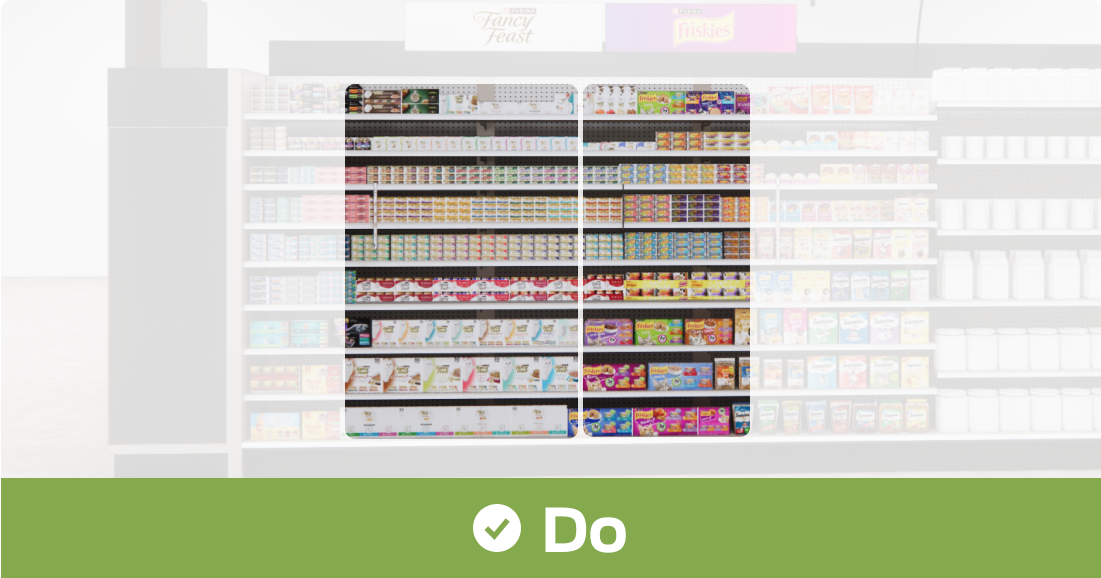
- Vertically brand block the aisle.
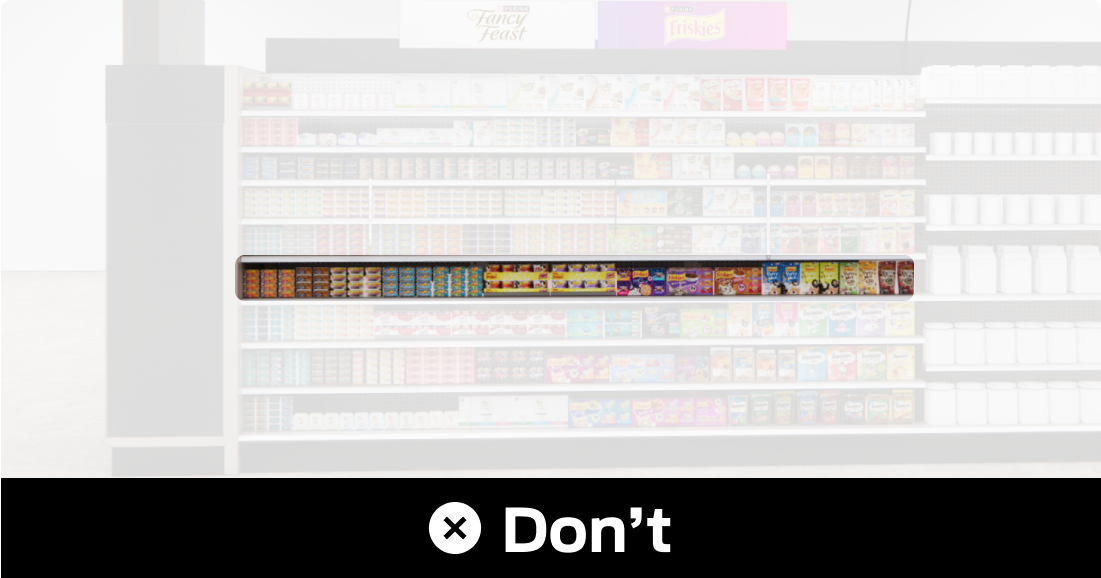
- Avoid horizontally brand blocking popular brands with a large SKU count.
Ensure products are easy to pick from the shelf and load into the cart, enhancing the shopping experience.
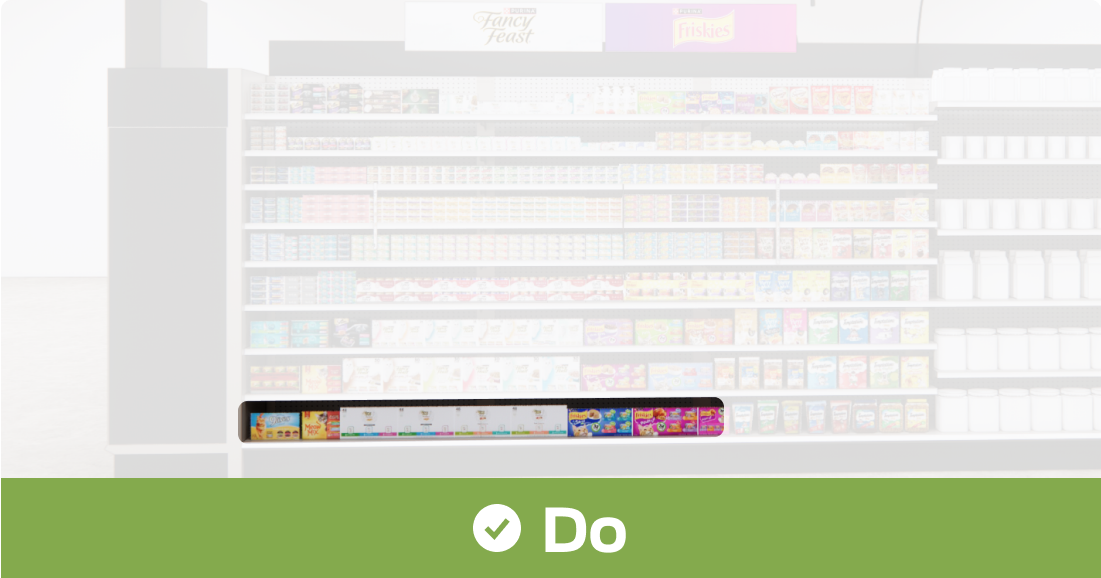
- Place larger multi/variety packs on the bottom shelf.

- Do not place small cans on the bottom shelf.
Motivate shoppers to try new or different items to cater to their cats' ever-changing preferences. Make sure high-growth items are prominently displayed and easy to find.
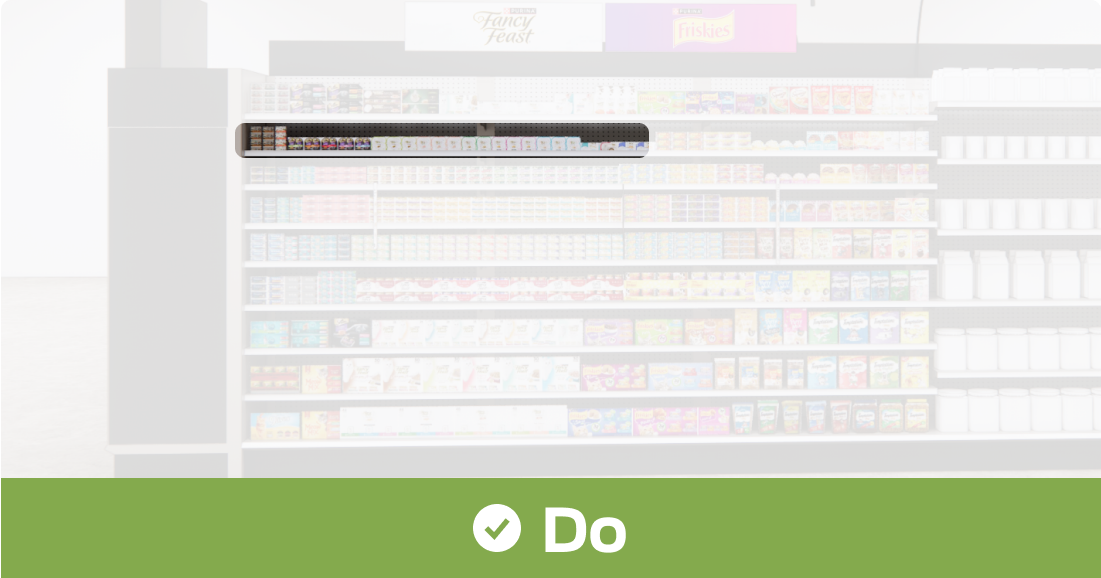
- Place new and higher price/oz items in the strike zone. This includes split cups/trays. If there is a large SKU count of split cups/trays within a brand they may be vertically blocked next to their parent brand's cans.

- Avoid placing new items in hard-to-find places like the top
Use popular items to draw shoppers into the aisle, leveraging their visibility to drive traffic and sales. Offer a wide range of brands, proteins, flavors, textures, and package sizes/types to meet diverse cat and human preferences.
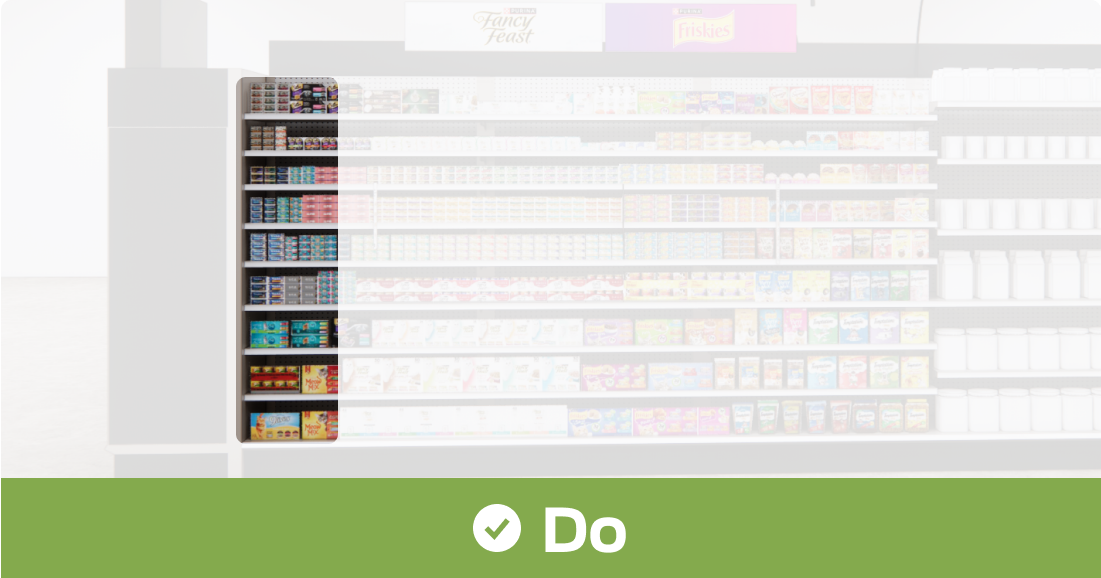
- Lead the aisle with brands that have limited SKUs in higher price tiers (ultra/pinnacle), flowing into mainstream brands that offer a multitude of SKUs.
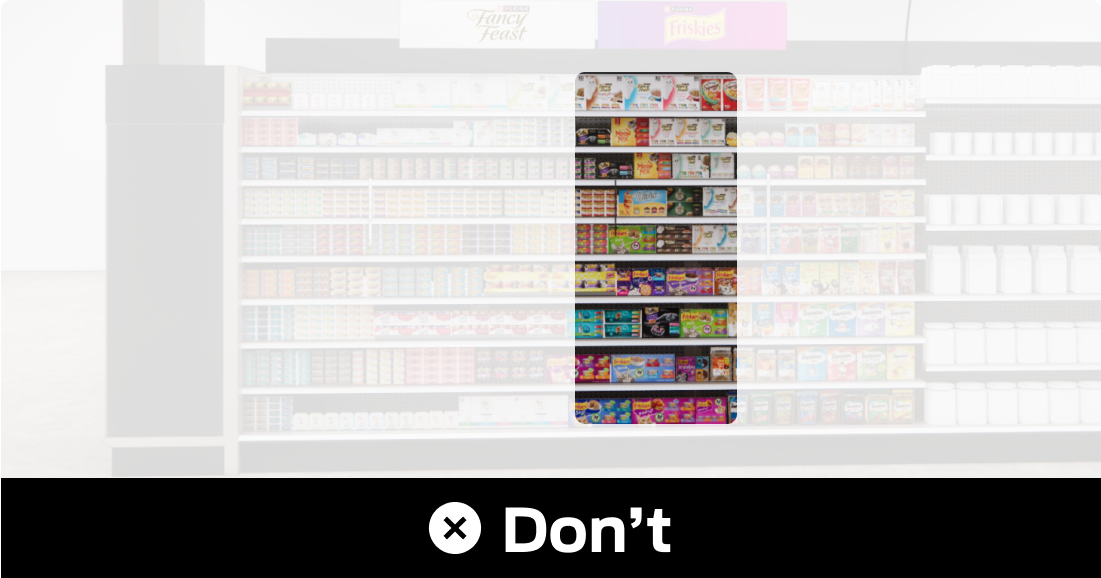
- Do not organize the aisle by package type, flavor, or texture.
Create connections between wet cat food, dry food, treats, and litter to encourage shoppers to buy across categories.
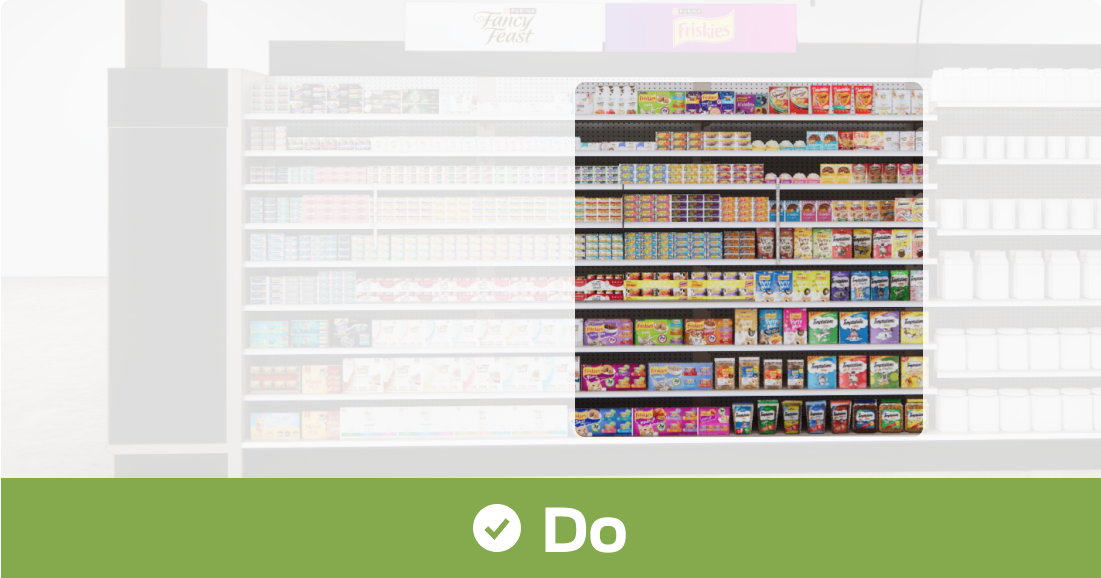
- Position wet cat food near dry cat food and cat treats, creating brand blocks between segments where possible (e.g., Friskies wet cat food next to Friskies treats in sets where wet cat food is adjacent to cat treats).

- Avoid placing wet cat food with wet dog food by blocking product types.
Optimizing Fulfillment Methods for Wet Cat Food
Wet Cat Food Fulfillment – 1
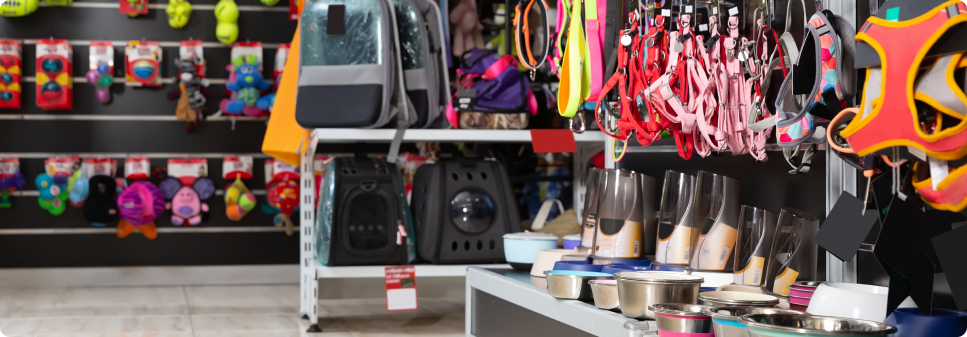
Wet cat food remains a segment where shoppers heavily rely on in-store shopping due to the ease of choosing multiple single items. The in-store experience allows customers to pick and choose with greater flexibility.
Wet Cat Food Fulfillment – 2

Replicating the in-store “treasure hunt” experience online is crucial. Shoppers enjoy the discovery process in physical stores, and creating a similar engaging experience online can enhance customer satisfaction and loyalty.
Wet Cat Food Fulfillment – 3
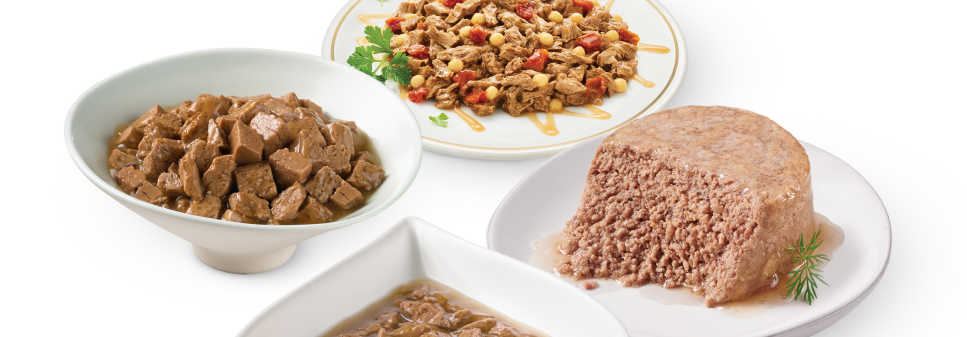
Purina is the only company that offers a customized variety pack, but no CPG company has successfully scaled a program nationally across retailers. Offering a “create your own variety pack” feature would allow consumers to pick exact varieties and assortments that cater to their cat’s unique preferences, providing a personalized shopping experience.
Wet Cat Food Fulfillment – 4

Multi-packs and variety packs are key growth drivers for wet cat food—make it easy by encouraging online purchase and home delivery.
Wet Cat Food Fulfillment – 5
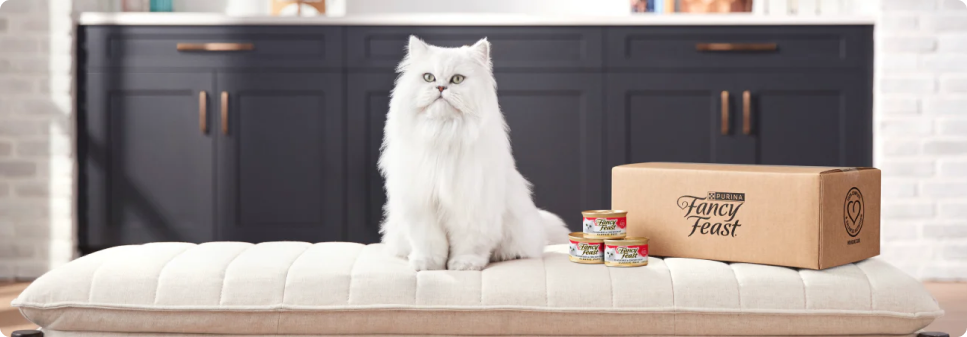
Many cat owners know their cat’s preferences and want a simple ordering experience. Promote variety pack subscriptions to offer cats variety while providing shoppers convenience—and driving repeat purchases for retailers.
Wet Cat Food Fulfillment – 2
Replicating the in-store “treasure hunt” experience online is crucial. Shoppers enjoy the discovery process in physical stores, and creating a similar engaging experience online can enhance customer satisfaction and loyalty.
Wet Cat Food Fulfillment – 3
Purina is the only company that offers a customized variety pack, but no CPG company has successfully scaled a program nationally across retailers. Offering a “create your own variety pack” feature would allow consumers to pick exact varieties and assortments that cater to their cat’s unique preferences, providing a personalized shopping experience.
Wet Cat Food Fulfillment – 4
Multi-packs and variety packs are key growth drivers for wet cat food—make it easy by encouraging online purchase and home delivery.
Wet Cat Food Fulfillment – 5
Many cat owners know their cat’s preferences and want a simple ordering experience. Promote variety pack subscriptions to offer cats variety while providing shoppers convenience—and driving repeat purchases for retailers.
Wet Cat Food Fulfillment – 3
Purina is the only company that offers a customized variety pack, but no CPG company has successfully scaled a program nationally across retailers. Offering a “create your own variety pack” feature would allow consumers to pick exact varieties and assortments that cater to their cat’s unique preferences, providing a personalized shopping experience.
Wet Cat Food Fulfillment – 4
Multi-packs and variety packs are key growth drivers for wet cat food—make it easy by encouraging online purchase and home delivery.
Wet Cat Food Fulfillment – 5
Many cat owners know their cat’s preferences and want a simple ordering experience. Promote variety pack subscriptions to offer cats variety while providing shoppers convenience—and driving repeat purchases for retailers.
Wet Cat Food Fulfillment – 4
Multi-packs and variety packs are key growth drivers for wet cat food—make it easy by encouraging online purchase and home delivery.
Wet Cat Food Fulfillment – 5
Many cat owners know their cat’s preferences and want a simple ordering experience. Promote variety pack subscriptions to offer cats variety while providing shoppers convenience—and driving repeat purchases for retailers.
Wet Cat Food Fulfillment – 5
Many cat owners know their cat’s preferences and want a simple ordering experience. Promote variety pack subscriptions to offer cats variety while providing shoppers convenience—and driving repeat purchases for retailers.
Utilizing the PLUS Framework for the Wet Cat Food Segment
By leveraging these areas of the PLUS framework, retailers can effectively enhance their wet cat food segment, attracting new customers, broadening product appeal, encouraging premium purchases, and increasing overall consumption.

Welcome:
Target New
Households
Welcome: Ensure Education and Highlight Kitten Offerings
Ensure kitten items are visible and think of ways to educate shoppers on the types of food available for their new cats.
More than 30% of current dry cat food buyers don't purchase wet cat food. Converting 10% of these shoppers creates a $216m opportunity.

Broaden:
Expand the Definitions of Traditional Segments
Broaden: Highlight Innovation and New Ways of Shopping
Use aisle flow to guide shoppers from traditional wet cat food to a broader variety of offerings, such liquid cat treats, new package types, targeted nutrition and omni-shopping options.
If 10% of current wet cat food users purchase 5 units of liquid cat treats per year, it is a $38m opportunity.

Upgrade:
Educate Trade Consumers to Higher Price Tiers
Upgrade: Encourage Upgrade with Visibility
Place higher-priced (or price/oz) items in the strike zone for optimal visibility. Showcase upgraded items with signage or lighting.
If 10% of premium wet cat food buyers trade up to super premium wet cat food, it is a $66m opportunity.

Expand:
Strategies & Tactics to Increase Consumption of Current Consumers
Expand: Offer a Variety of Singles and Multi-Packs
Ensure similar items are placed close to one another to facilitate bundle promotions that make it easy for shoppers to load up their baskets. Encourage variety and multi-pack purchases to increase consumption.
If current wet cat food buyers purchase 1 more unit per year, it is a $31m opportunity.