
Dry Dog Food
Explore strategies to simplify the dry dog food aisle, boost sales, and increase shopper satisfaction. From brand blocking to omni-fulfillment methods like subscriptions, this unit shows you how to optimize shelving and enhance the shopping experience.
Dry Dog Food
Understanding Shopper Decision Trees in Retail Shelving
Shopper decision trees (SDTs) provide valuable insights into how shoppers browse products and prioritize their choices. By understanding the hierarchy of what is most important to shoppers, we can enhance the shopping experience.
While SDTs serve as a guiding framework for organizing the retail shelf, they are not meant to be followed rigidly. Instead, they should be used to make the shopping experience more intuitive and convenient for the customer. By referencing SDTs, we can ensure that products are arranged in a way that aligns with shopper priorities, facilitating easier and more satisfying shopping journeys.
Decision 1:
Brand
Decision 2:
Life Stage
Decision 3:
Breed Size
Decision 4:
Flavor
Decision 5:
Health Benefit

Challenges Shoppers Face in Navigating the Aisle and Finding Dry Dog Food
By understanding these challenges, retailers can take steps to simplify the shopping experience, making it easier for customers to find and choose the right products.
Best Practices
for Retail Shelving
Click on a tactic to learn more
Shoppers tend to look for their preferred brand first. Vertically brand block the aisle to guide shoppers down the aisle with familiar product offerings and clear signage. Place smaller bags on the top shelves and larger bags on the bottom shelves for easy access.
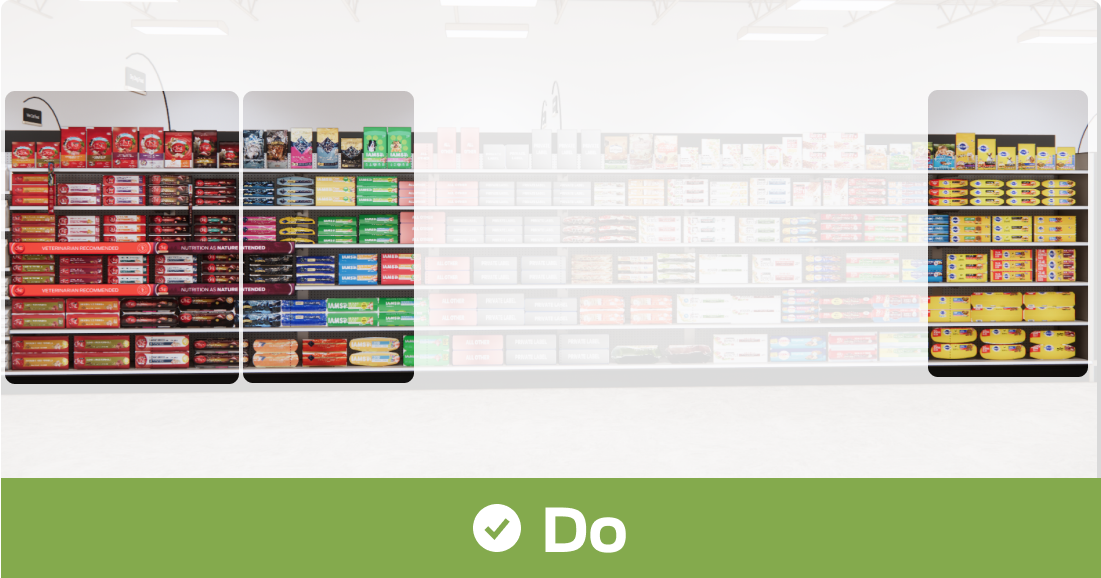
- Vertically brand block the aisle, leading with high-growth ultra/super premium items on the racetrack and popular high household brands along the corridor.
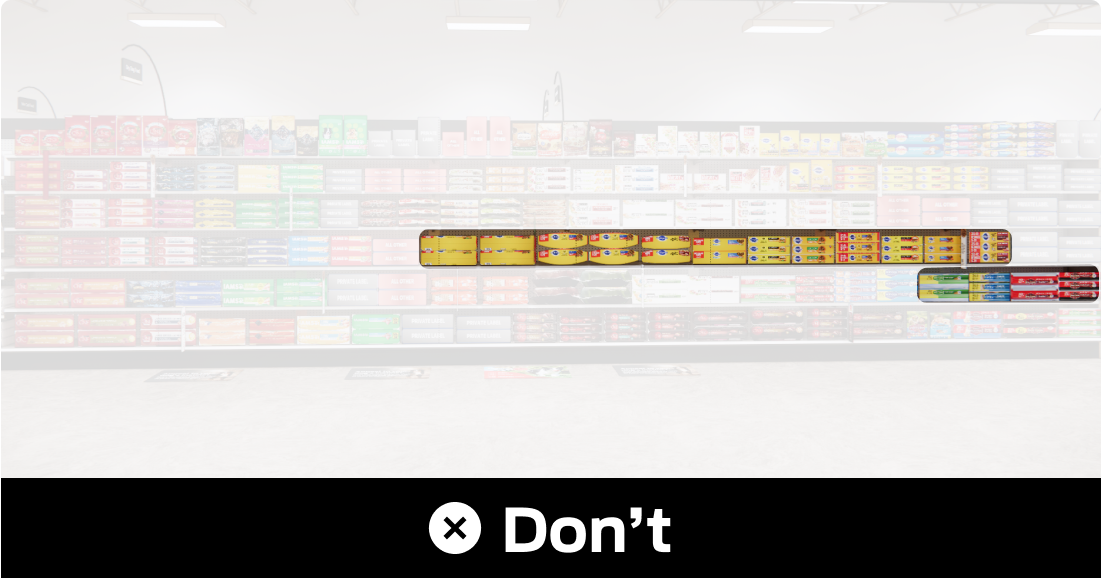
- Do not horizontally brand block
Position higher-priced sublines of brands within the brand block, next to the mainline products, to encourage shoppers to trade up.
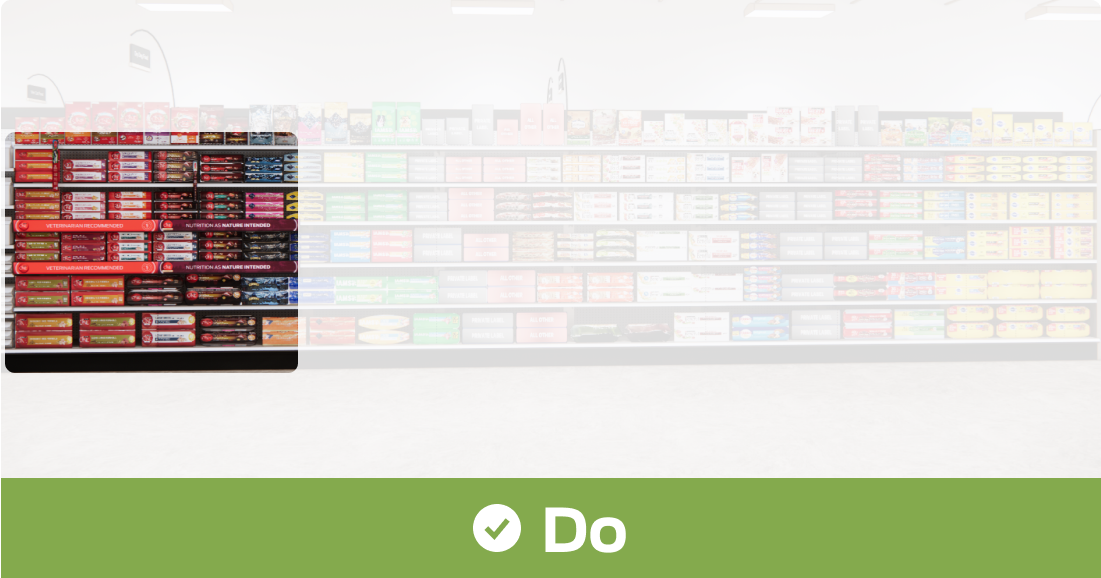
- Place all sublines of a brand within a single brand block. (Examples include Purina ONE ML, Plus, and True Instinct.)
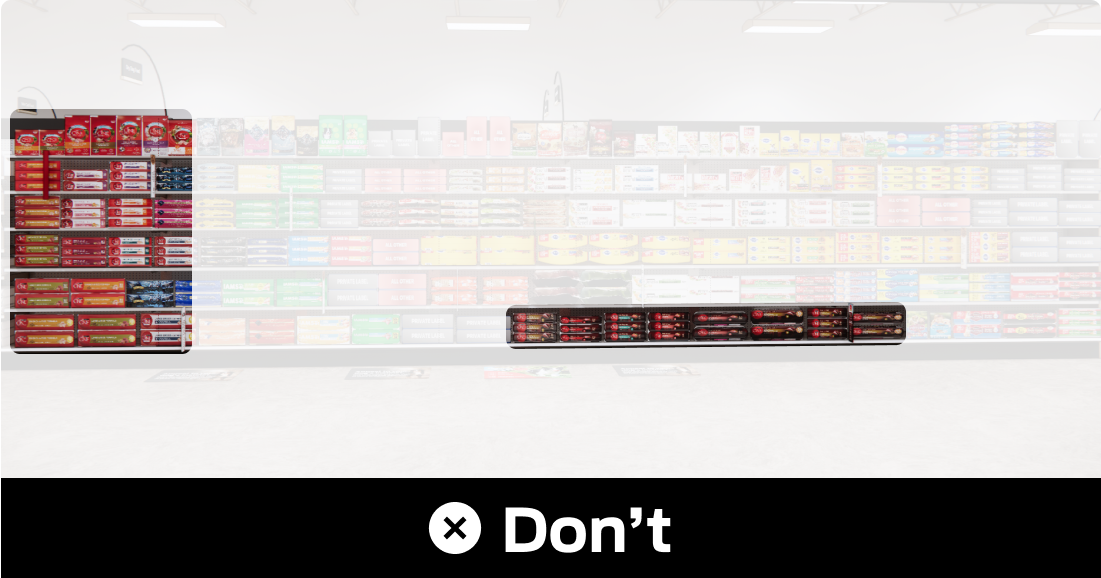
- Avoid organizing the shelf by category drivers, which separates sublines from their parent brand.
Ensure that a wide range of products is available, offering variety in brand, flavor, life stage, breed size, health benefits, bag size, and price options to meet diverse shopper needs.
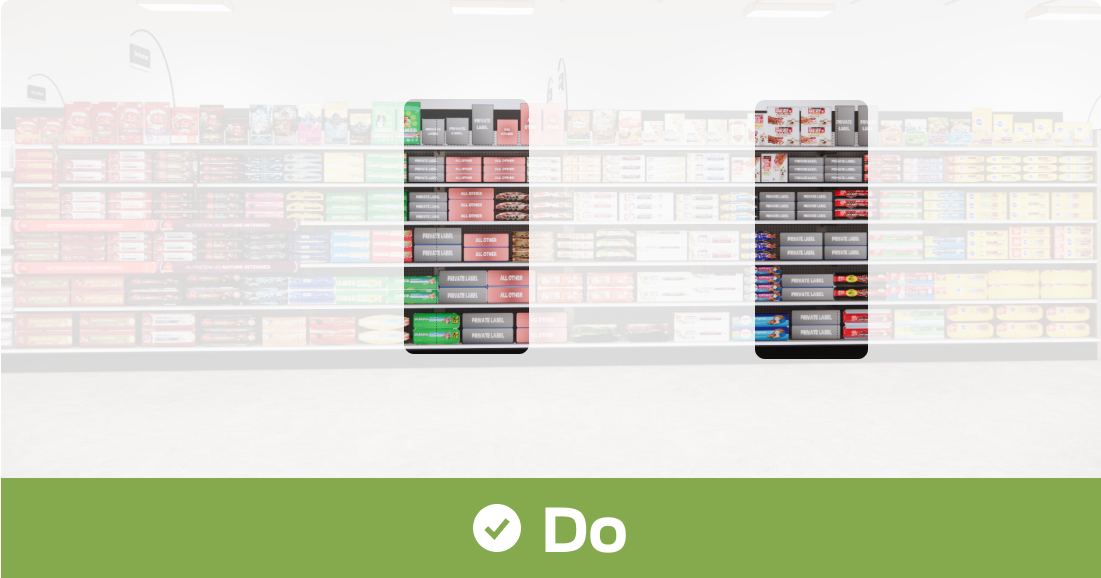
- Position private label brands next to brands within their corresponding price tier. Place niche brands (with a low SKU count) in the center aisle where shoppers tend to spend more time.
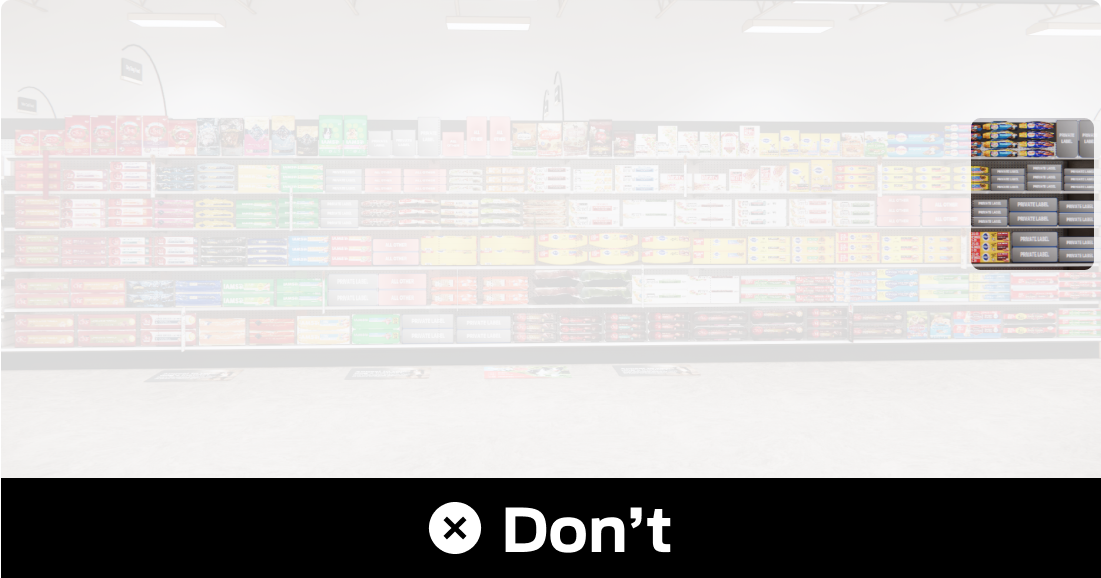
- Do not lead the aisle with private label brands or place them in their own section away from competitive brands. Also, avoid leading the aisle with niche brands.
Use strategies that encourage cross-purchases, such as signage or secondary placements within the dry dog food section (e.g., clip strips, hanger shelves), to promote buying wet dog food and dog treats along with dry food.
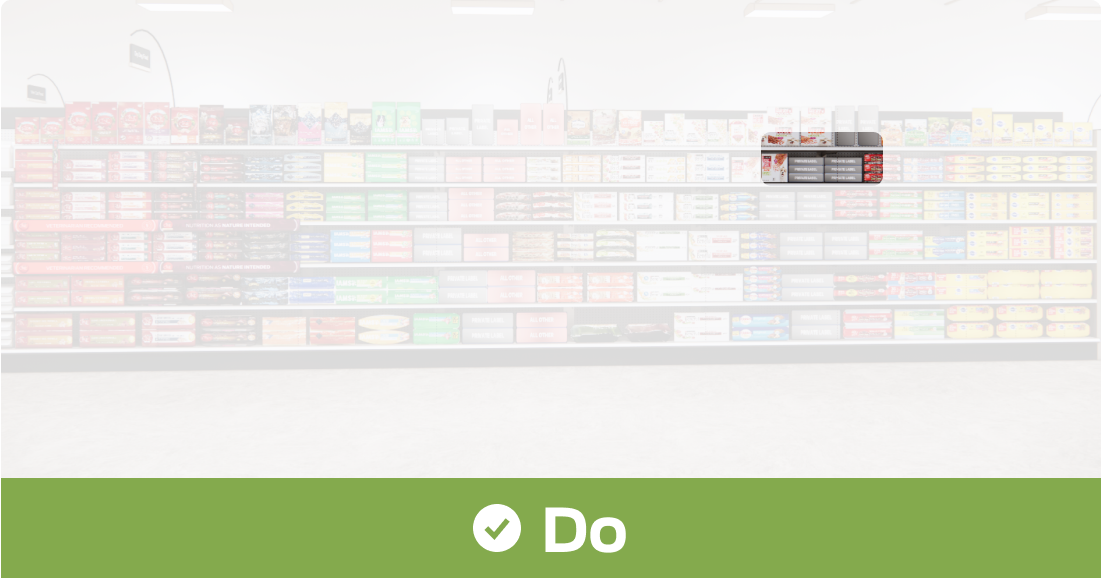
- Utilize signage or secondary placements that encourage shoppers to make cross-purchases. (Add signs into the image.)
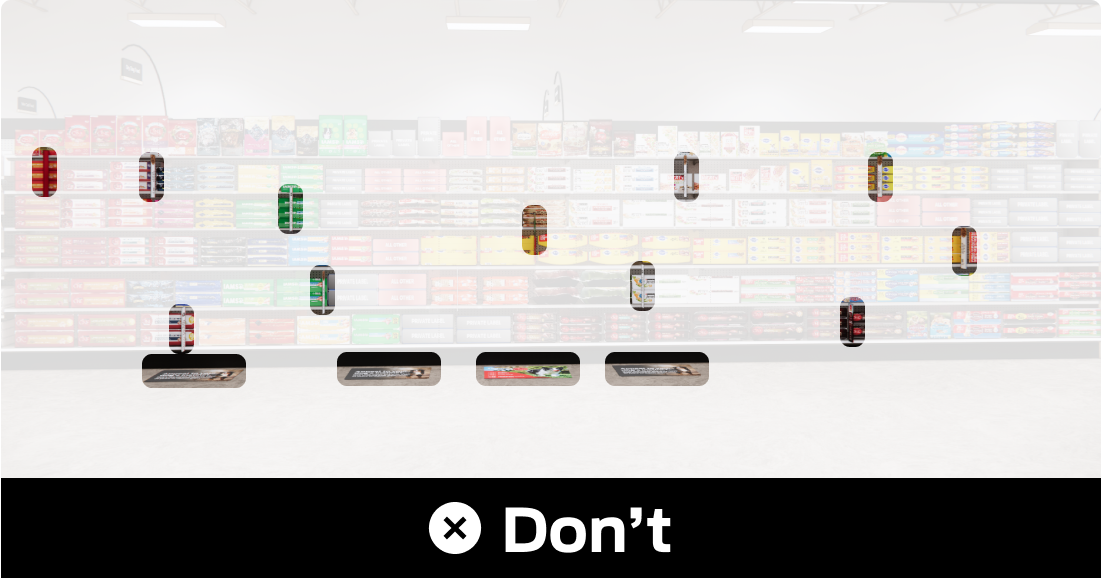
- Refrain from confusing shoppers with an overabundance of merchandise vehicles or digital signs.
Optimizing Fulfillment Methods for Dry Dog Food
By leveraging these fulfillment methods, retailers can make purchasing dry dog food more convenient and attractive for customers, leading to increased satisfaction and repeat business.
Dry Dog Food Fulfillment – 1
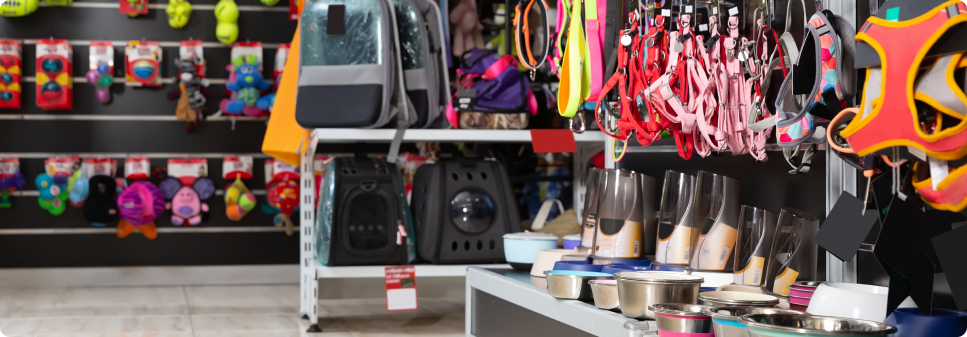
In-store shopping allows customers to explore a wide range of options in one place. Stock both small and large food packages to meet different needs—from trial and budget buys to bulk purchases. Dogs have unique nutritional requirements, so offering variety helps shoppers find the right fit. Support their choices with clear pack claims, in-store education, and organized shelves.
Dry Dog Food Fulfillment – 2
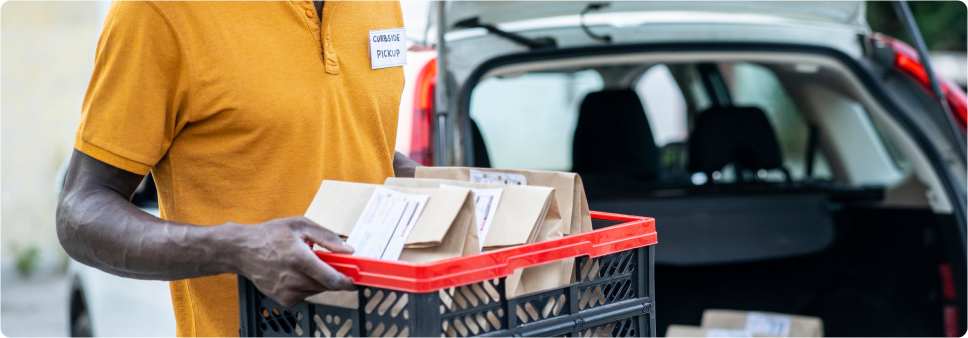
Curbside pick-up and delivery offer busy pet parents a convenient way to shop—especially for heavy dry dog food. These options are ideal for households with large or multiple dogs purchasing bigger bags.
Dry Dog Food Fulfillment – 3

Subscriptions ensure a steady supply of dry dog food, reducing last-minute trips and offering potential cost savings through recurring order discounts. They also build shopper loyalty by encouraging repeat purchases and ongoing engagement.
Dry Dog Food Fulfillment – 2
Curbside pick-up and delivery offer busy pet parents a convenient way to shop—especially for heavy dry dog food. These options are ideal for households with large or multiple dogs purchasing bigger bags.
Dry Dog Food Fulfillment – 3
Subscriptions ensure a steady supply of dry dog food, reducing last-minute trips and offering potential cost savings through recurring order discounts. They also build shopper loyalty by encouraging repeat purchases and ongoing engagement.
Dry Dog Food Fulfillment – 3
Subscriptions ensure a steady supply of dry dog food, reducing last-minute trips and offering potential cost savings through recurring order discounts. They also build shopper loyalty by encouraging repeat purchases and ongoing engagement.
Utilizing the PLUS Framework for the Dry Dog Food Segment
By leveraging these areas of the PLUS framework, retailers can effectively enhance their dry dog food segment, attracting new customers, broadening product appeal, encouraging premium purchases, and increasing overall consumption.

Welcome:
Target New
Households
Welcome: Offer Variety and Showcase Benefits
Ensure an optimal assortment of offerings.
Educate shoppers on benefits of dry food, particularly for puppies.
4.1M puppies are acquired each year, with most new owners feeding dry dog food. If 10% of these HHLDs purchase dry puppy food, it is a $47m opportunity.

Broaden:
Expand the Definitions of Traditional Segments
Broaden: Highlight New Ways to Purchase
Push dry dog food subscriptions and omnichannel fulfillment options to make purchasing easy.
If current dry dog food users who do not feed wet food, make 1 wet food purchase this year, it is a $32m opportunity. Potential growth is greater if these consumers have a subscription inclusive of dry and wet food.

Upgrade:
Educate Trade Consumers to Higher Price Tiers
Upgrade: Provide a Perfectly-Placed Variety of Upgraded Items
Prioritize the assortment of premiumized offerings and shelve upgraded items next to their parent-brand to encourage trade-up.
Educate shoppers on benefits of premiumized ingredient claims.
If 1/3 of premium dry dog food buyers upgrade to super premium, it is a $104m opportunity.

Expand:
Strategies & Tactics to Increase Consumption of Current Consumers
Expand: Focus on Variety, Innovation and Trends
Offer a variety, flavor and size options.
Ensure availability of products that deliver on key Category Driver macrotrends.
If half of premium dry dog food buyers purchase 1 more unit per year, it is a $183m opportunity.