
Dry Cat Food
Discover how to make shopping for dry cat food easier by improving organization, product visibility, and variety to help shoppers find and choose the right formula.
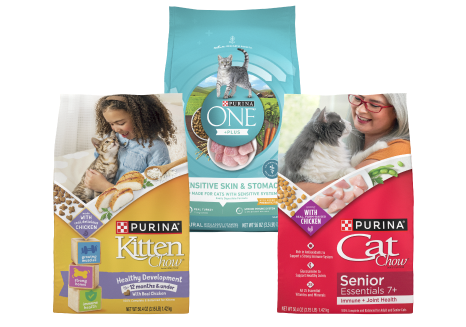

Dry Cat Food
Understanding Shopper Decision Trees in Retail Shelving
Shopper decision trees (SDTs) provide valuable insights into how shoppers browse products and prioritize their choices. By understanding the hierarchy of what is most important to shoppers, we can enhance the shopping experience.
While SDTs serve as a guiding framework for organizing the retail shelf, they are not meant to be followed rigidly. Instead, they should be used to make the shopping experience more intuitive and convenient for the customer. By referencing SDTs, we can ensure that products are arranged in a way that aligns with shopper priorities, facilitating easier and more satisfying shopping journeys.
Decision 1:
Formulation or Type
Decision 2:
Brand or Sub-Brand
Decision 3:
Lifestage
Decision 4:
Health or Lifestyle Benefit

Challenges Shoppers Face in Navigating the Aisle and Finding Dry Cat Food
By understanding these challenges, retailers can take steps to simplify the shopping experience, making it easier for customers to find and choose the right products.
Best Practices
for Retail Shelving
Click on a tactic to learn more
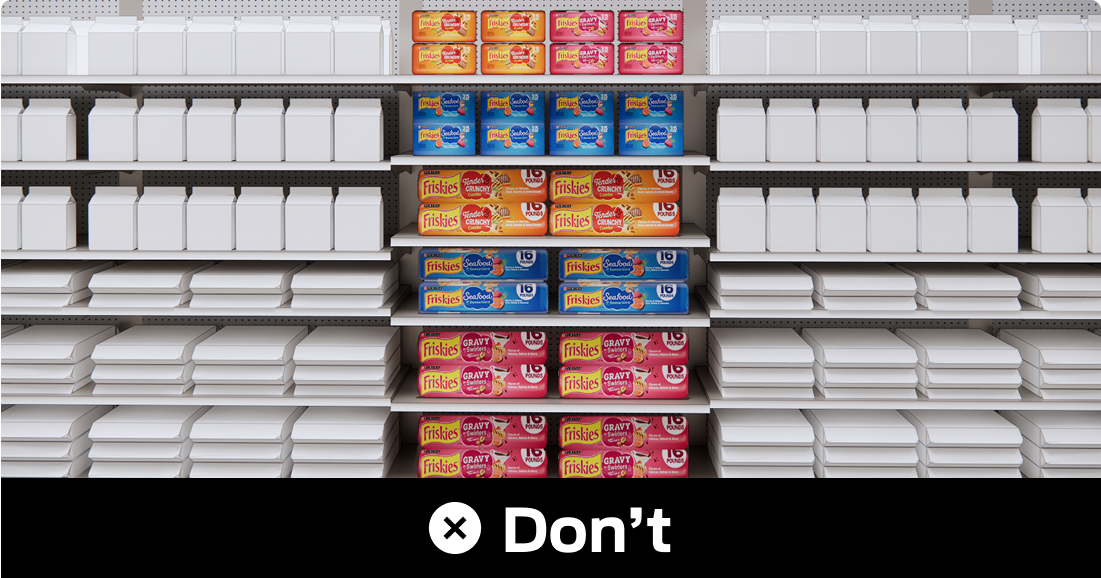
- Ease of Navigation
- Encourage Exploration
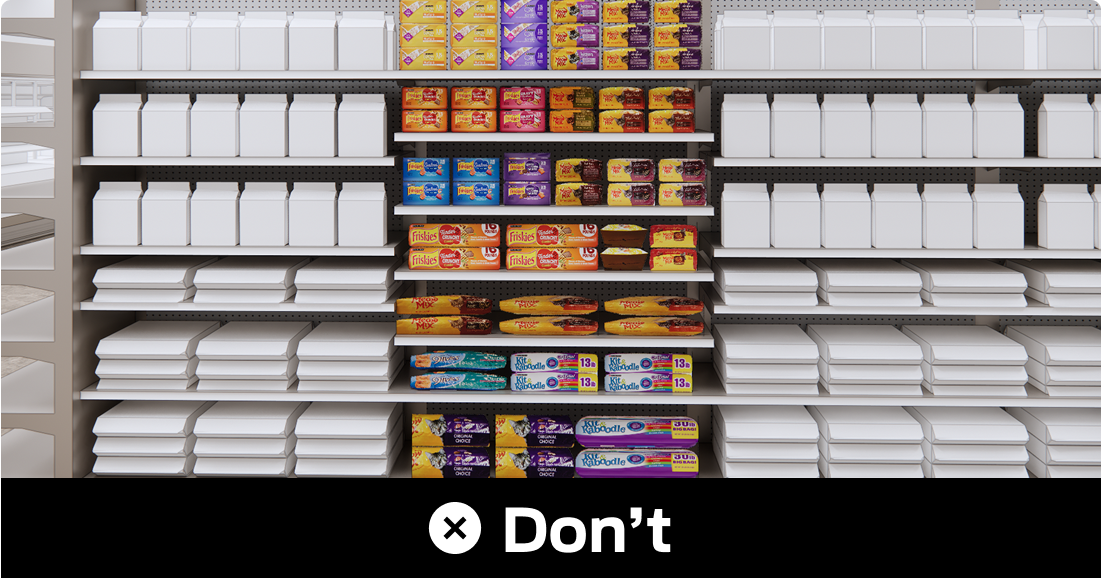
- Visibility of High-Growth and Popular Items
- Variety of Smaller Bag Sizes
- Cross-Purchasing Connections
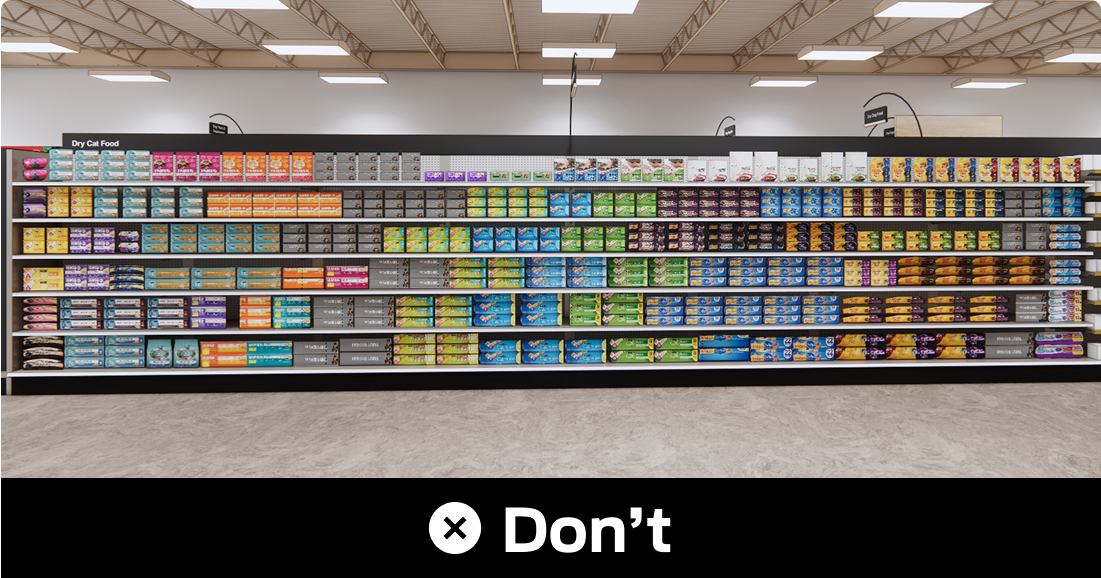
Organize shelves to make it simple for shoppers to find what they need quickly and efficiently.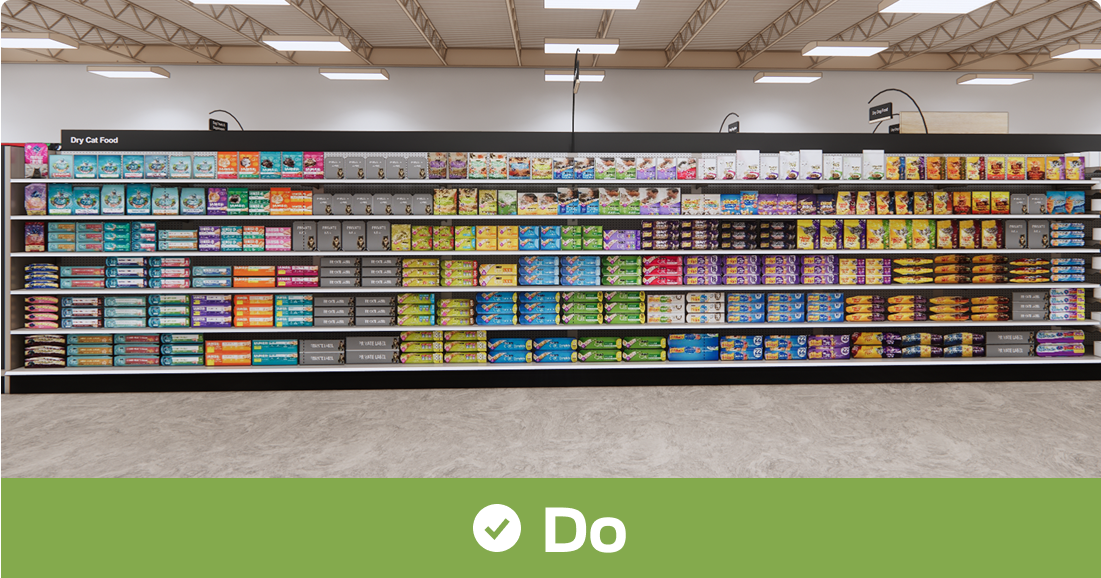
Motivate shoppers to try new or different items to cater to their cats' ever-changing preferences.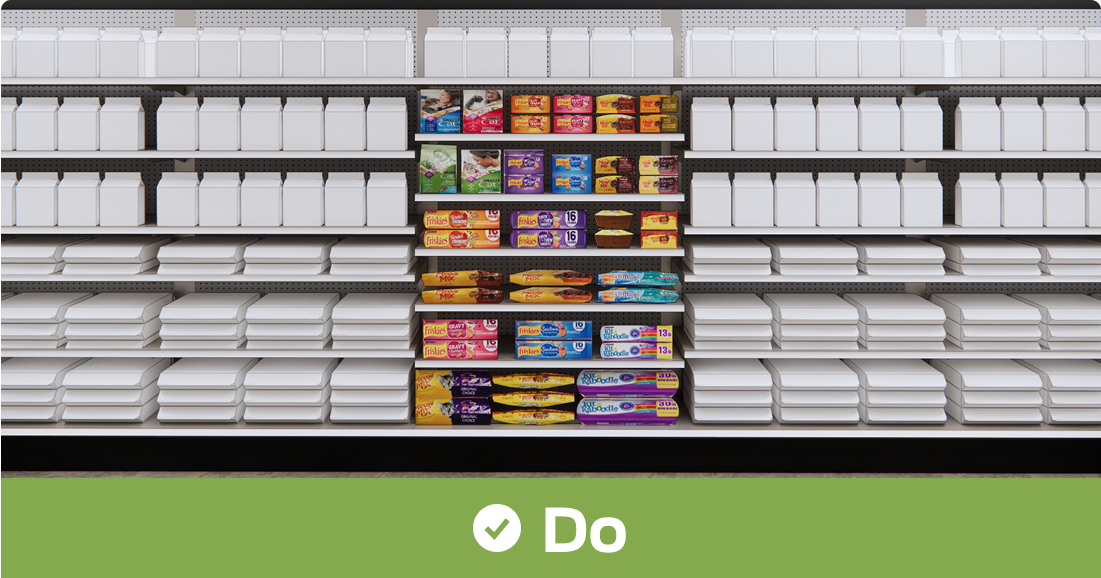
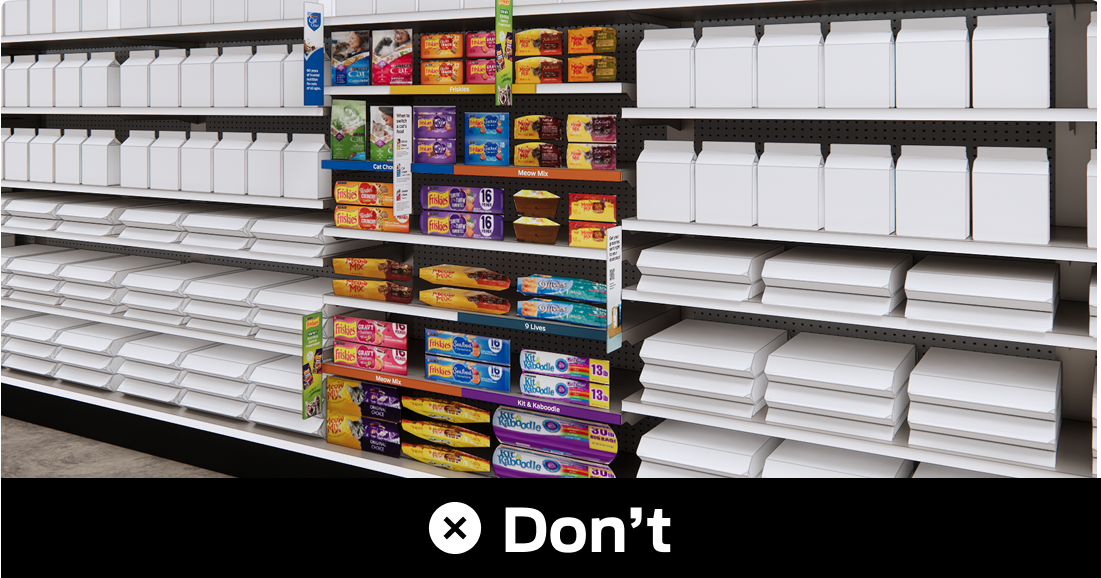
Ensure high-growth and popular items are prominently displayed and easy to find, using their visibility to draw shoppers into the aisle and drive traffic.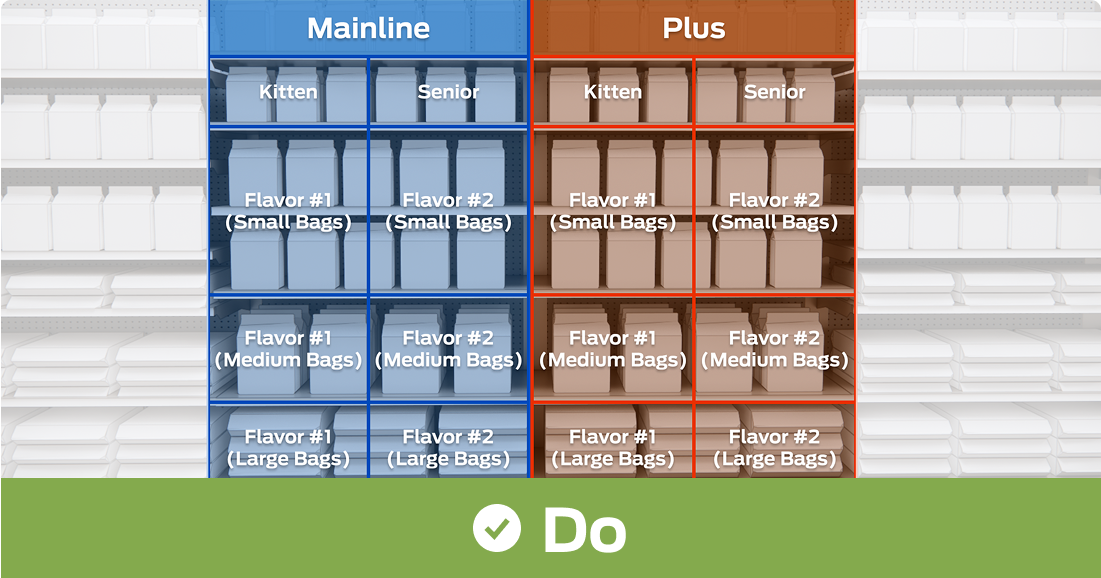
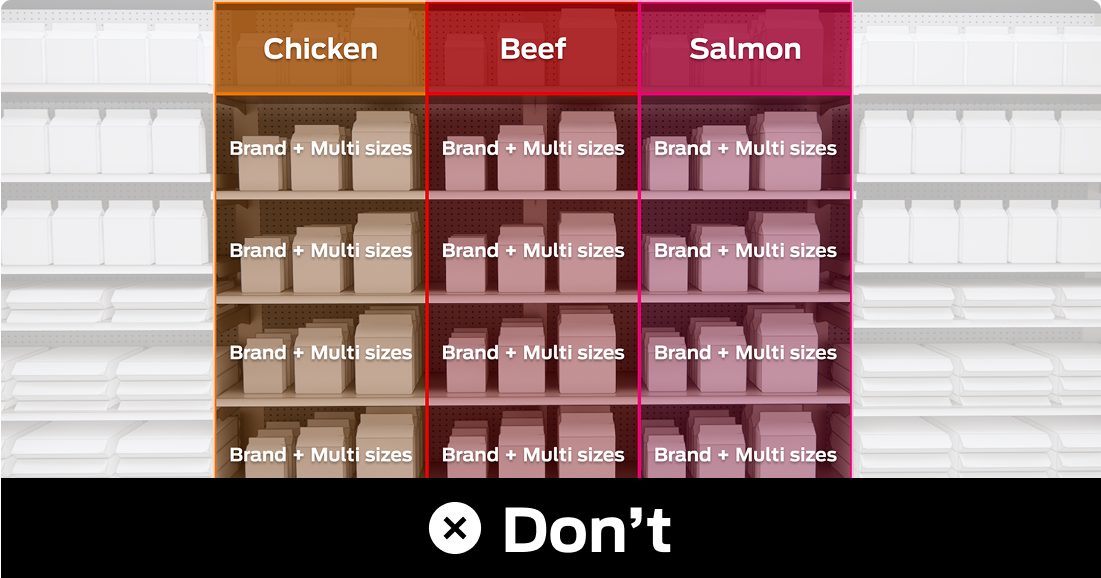
Offer a decent variety of smaller bag sizes to encourage trial purchases, accommodating finicky cats.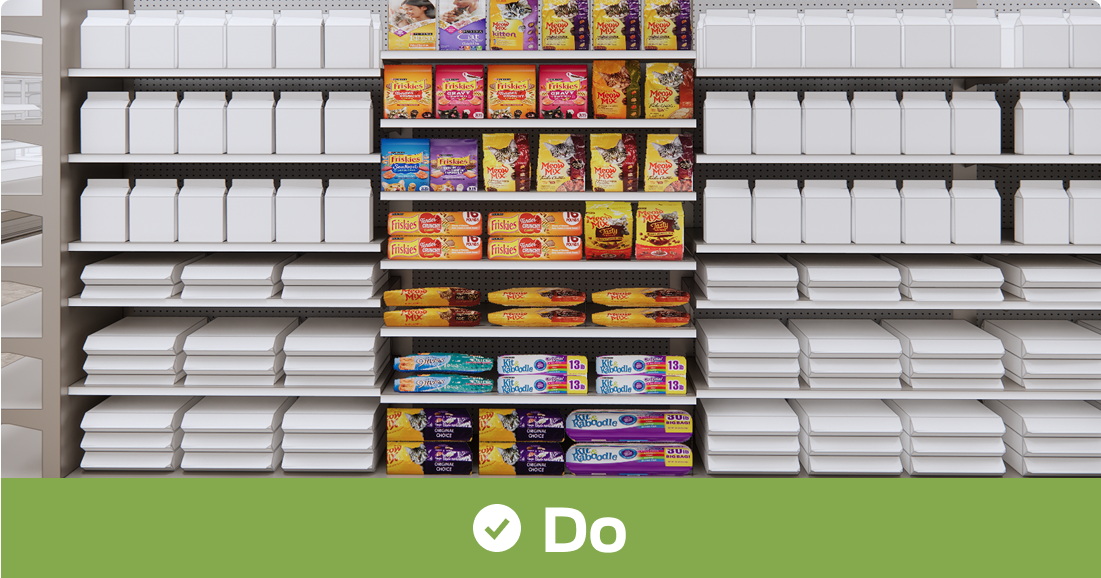
Create a connection between wet cat food, dry food, treats, and litter to encourage cross-purchasing.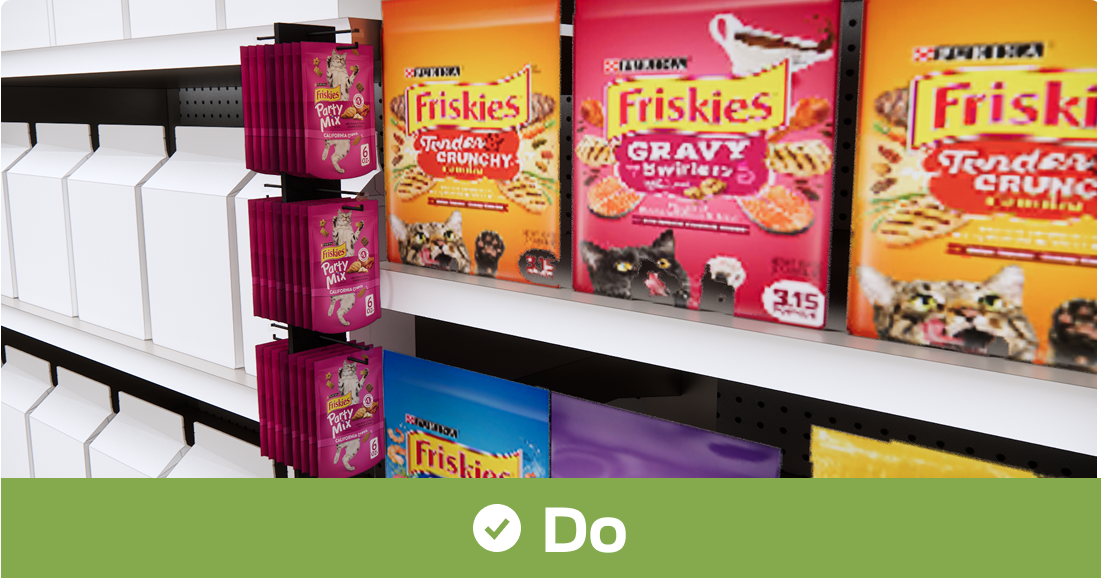
Optimizing Fulfillment Methods for Dry Cat Food
By addressing these opportunities and challenges, an online best-in-class retail shelving education platform can guide retailers on how to optimize their omni-fulfillment methods, ensuring a seamless and convenient shopping experience for customers.
Dry Cat Food Fulfillment – 1

Showcase a range of smaller food bags to encourage trial and flavor rotation. Help cat owners choose with organized shelves and clear in-store education.
Dry Cat Food Fulfillment – 2

For cat owners managing multiple diets, curbside pickup makes it easy to order various formulas without the hassle of in-store shopping or delivery delays—a true time-saver.
Dry Cat Food Fulfillment – 3

Dry cat food is bulky, making ship-to-home ideal—especially for households with multiple cats buying larger bags. Ensure online platforms are easy to navigate, highlight deals, and encourage larger baskets without overwhelming shoppers.
Dry Cat Food Fulfillment – 4

Dry cat food shoppers tend to stick with preferred brands, making subscriptions an effective way to ensure consistent supply and drive repeat purchases—benefiting both shoppers and retailers.
Dry Cat Food Fulfillment – 2
For cat owners managing multiple diets, curbside pickup makes it easy to order various formulas without the hassle of in-store shopping or delivery delays—a true time-saver.
Dry Cat Food Fulfillment – 3
Dry cat food is bulky, making ship-to-home ideal—especially for households with multiple cats buying larger bags. Ensure online platforms are easy to navigate, highlight deals, and encourage larger baskets without overwhelming shoppers.
Dry Cat Food Fulfillment – 4
Dry cat food shoppers tend to stick with preferred brands, making subscriptions an effective way to ensure consistent supply and drive repeat purchases—benefiting both shoppers and retailers.
Dry Cat Food Fulfillment – 3
Dry cat food is bulky, making ship-to-home ideal—especially for households with multiple cats buying larger bags. Ensure online platforms are easy to navigate, highlight deals, and encourage larger baskets without overwhelming shoppers.
Dry Cat Food Fulfillment – 4
Dry cat food shoppers tend to stick with preferred brands, making subscriptions an effective way to ensure consistent supply and drive repeat purchases—benefiting both shoppers and retailers.
Dry Cat Food Fulfillment – 4
Dry cat food shoppers tend to stick with preferred brands, making subscriptions an effective way to ensure consistent supply and drive repeat purchases—benefiting both shoppers and retailers.
Utilizing the PLUS Framework for the Dry Cat Food Segment
By leveraging these areas of the PLUS framework, retailers can effectively enhance their cat litter segment, attracting new customers, broadening product appeal, encouraging premium purchases, and increasing overall consumption.

Welcome:
Target New
Households
Welcome: Drive Awareness & Simplify Choice
Ensure strong visibility of kitten products and provide clear education on different formulas. Make it easy for shoppers to discover and compare options.
Kittens make up 16% of the cat population, but only 4% of dry cat food sold is kitten formula. Shifting just 2% of sales to kitten formulas unlocks a $7.9M opportunity.

Broaden:
Expand the Definitions of Traditional Segments
Broaden: Increase Visibility & Drive Trial
Position new innovations—like dry toppers and enhanced kibble (meaty centers, freeze-dried, etc.)—where they are highly visible to encourage shopper engagement.
If 10% of dry cat food buyers purchased just one unit of toppers or add-ins per year, it would generate a $58M opportunity.

Upgrade:
Educate Trade Consumers to Higher Price Tiers
Upgrade: Strategically Anchor Premium Tiers
Position Premium and Super Premium price tiers where shoppers spend the most time. Ensure a smooth pricing progression between similar products (e.g., natural chicken varieties) to maintain category value and encourage trade-up.
Shifting just 10% of Premium households to Super Premium would generate a $47M opportunity.

Expand:
Strategies & Tactics to Increase Consumption of Current Consumers
Expand: Optimize Variety & Pack Sizes
Ensure availability of larger bags alongside a diverse selection of mid/small-sized bags within brands. Cat owners are brand loyal but often rotate between flavors—offering multiple options can drive variety, increase consumption, and boost sales.
If 10% of dry cat food buyers purchased just one additional unit per year, it would generate a $51M opportunity.