
Dog Treats
Shoppers face challenges in the dog treats aisle, such as finding the right form and size of treats and understanding feeding occasions and frequency. This module will explore strategies to improve shelf clarity, encourage impulse purchases, and drive multi-item baskets, leading to increased satisfaction and sales.
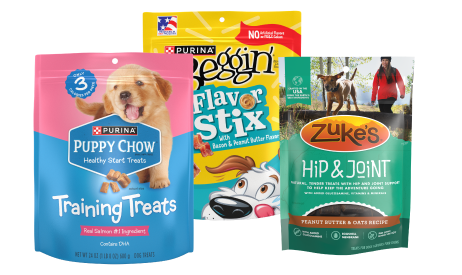

Dog Treats
Understanding Shopper Decision Trees in Retail Shelving
Shopper decision trees (SDTs) provide valuable insights into how shoppers browse products and prioritize their choices. By understanding the hierarchy of what is most important to shoppers, we can enhance the shopping experience.
While SDTs serve as a guiding framework for organizing the retail shelf, they are not meant to be followed rigidly. Instead, they should be used to make the shopping experience more intuitive and convenient for the customer. By referencing SDTs, we can ensure that products are arranged in a way that aligns with shopper priorities, facilitating easier and more satisfying shopping journeys.
Decision 1:
Occasion
Decision 2:
Form
Decision 3:
Brand
Decision 4:
Feature
Decision 5:
Package Type

Challenges Shoppers Face in Navigating the Aisle and Finding Dog Treats
By understanding these challenges, retailers can take steps to simplify the shopping experience, making it easier for customers to find and choose the right products.
Best Practices
for Retail Shelving
Click on a tactic to learn more
- Make Treats Easy to Find
- Optimize Shelf Clarity
- Encourage Multiple Treat Types
- Boost Impulse Buys
- Highlight Sizes for Trial and Loyalty
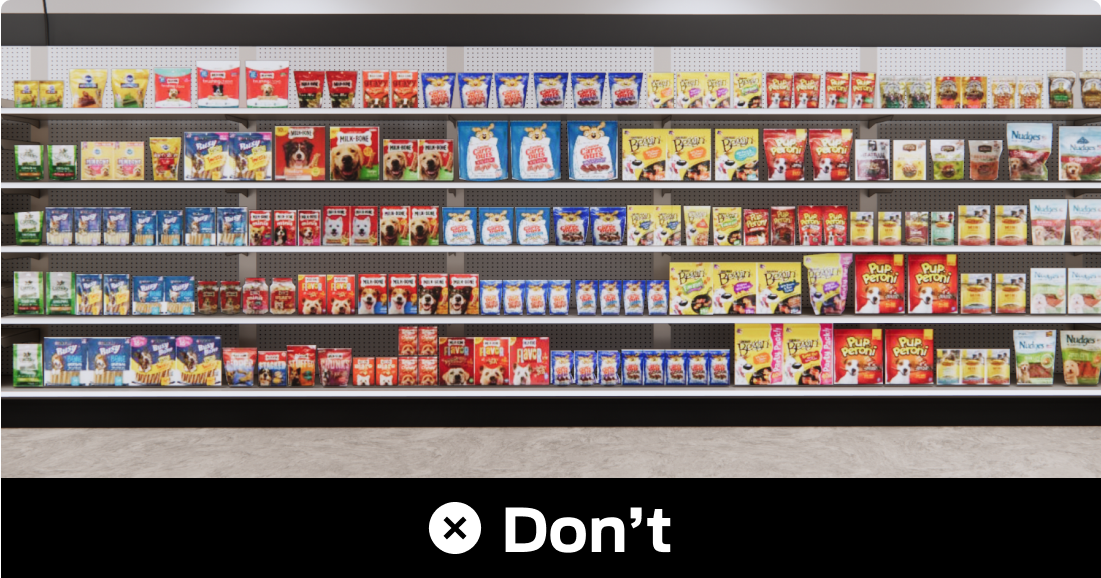
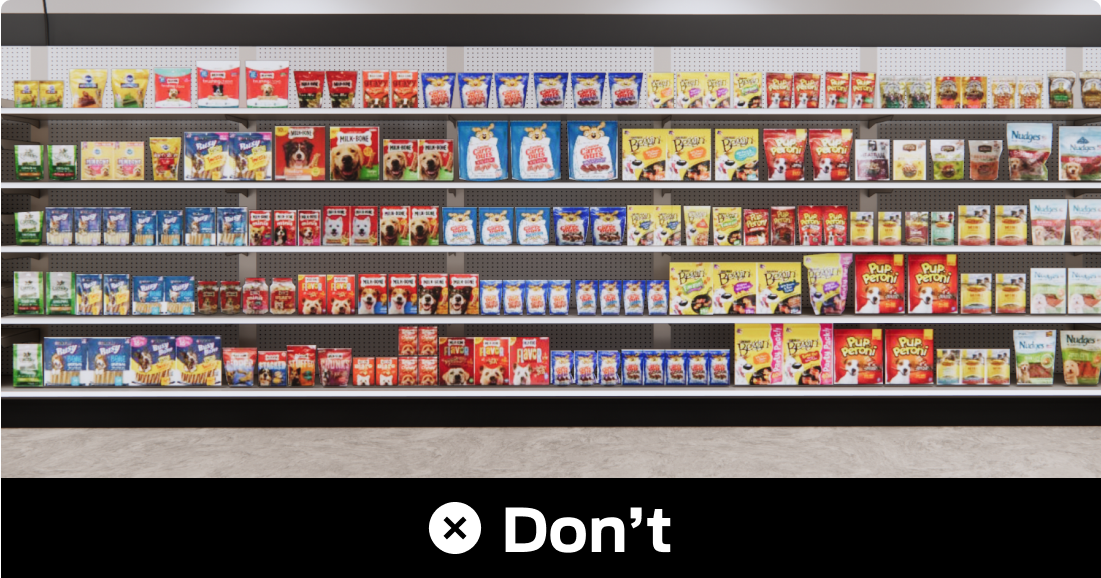
Make treats easy to identify and categorize by specific needs, like dental benefits, chew time, texture, or size. Use clear signage to educate shoppers on the unique purpose of each treat type.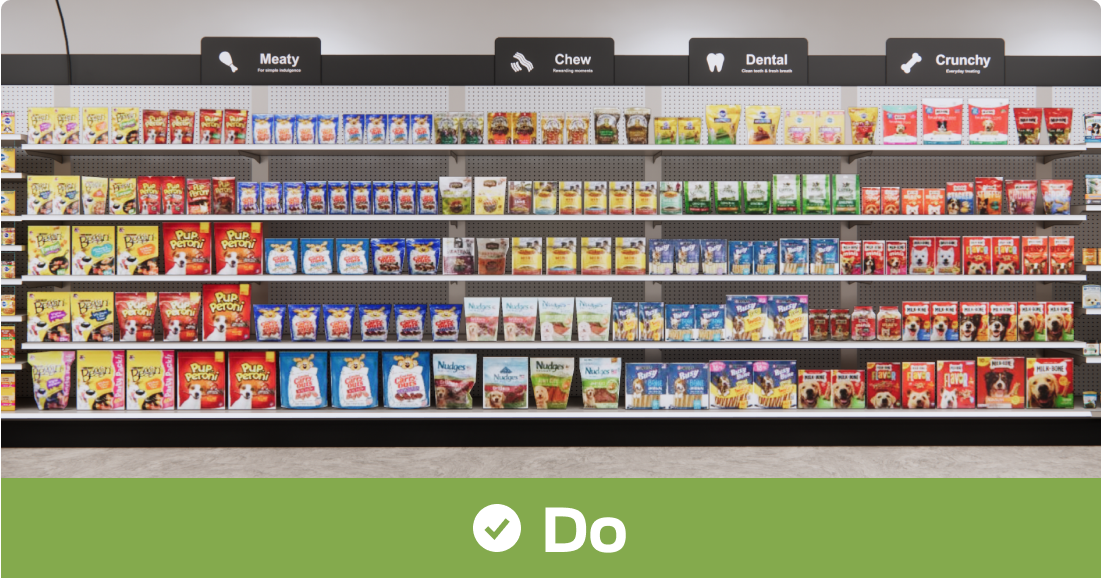
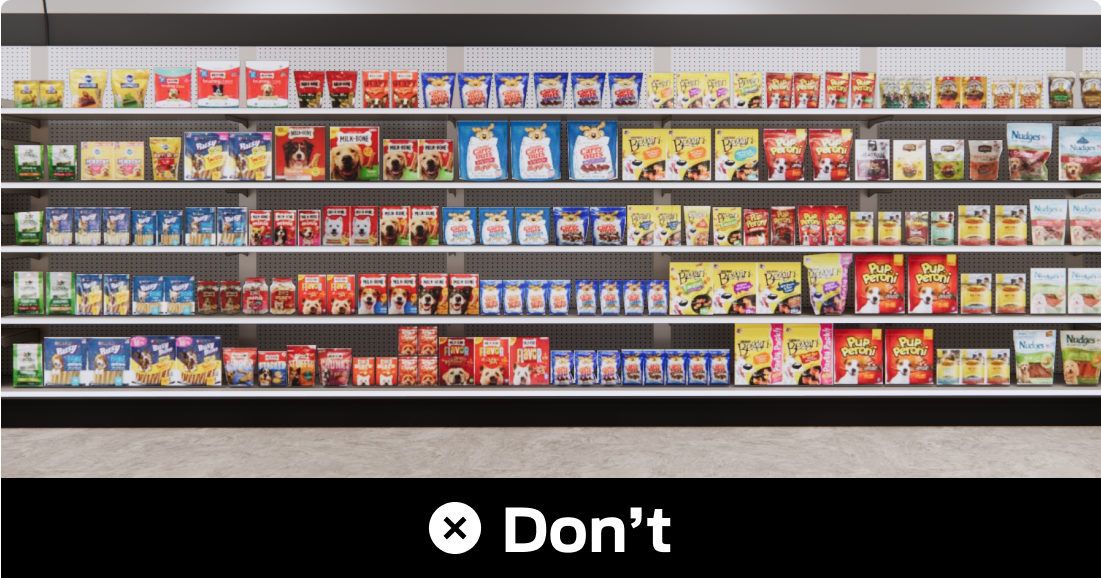
Improve shelf clarity by distinguishing between treat types (e.g., biscuits vs. cookies, dental vs. other functional treats). Organize chews by chew time and add signage to highlight the role of each form.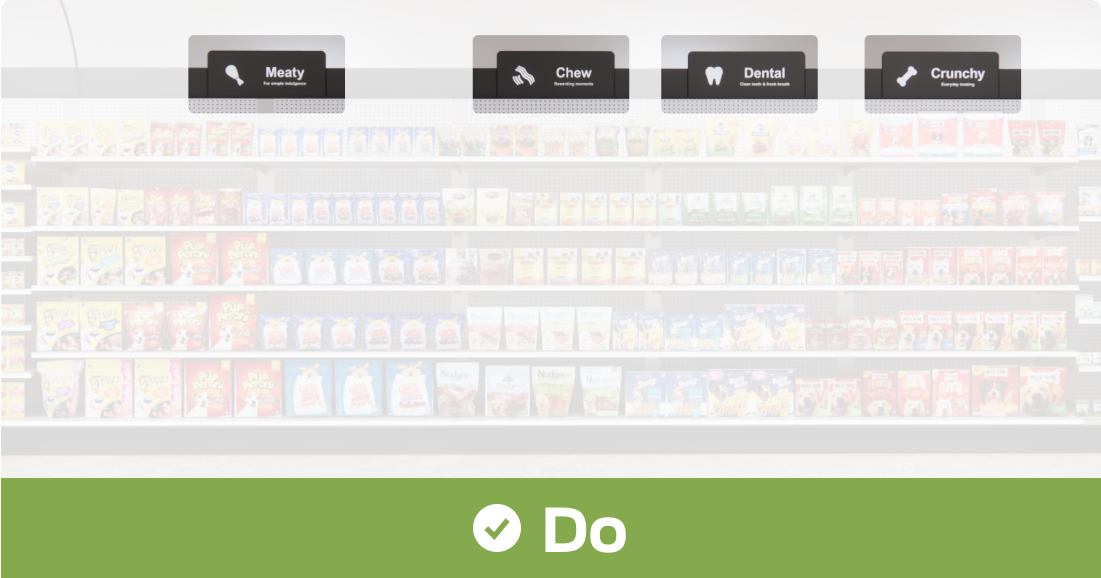
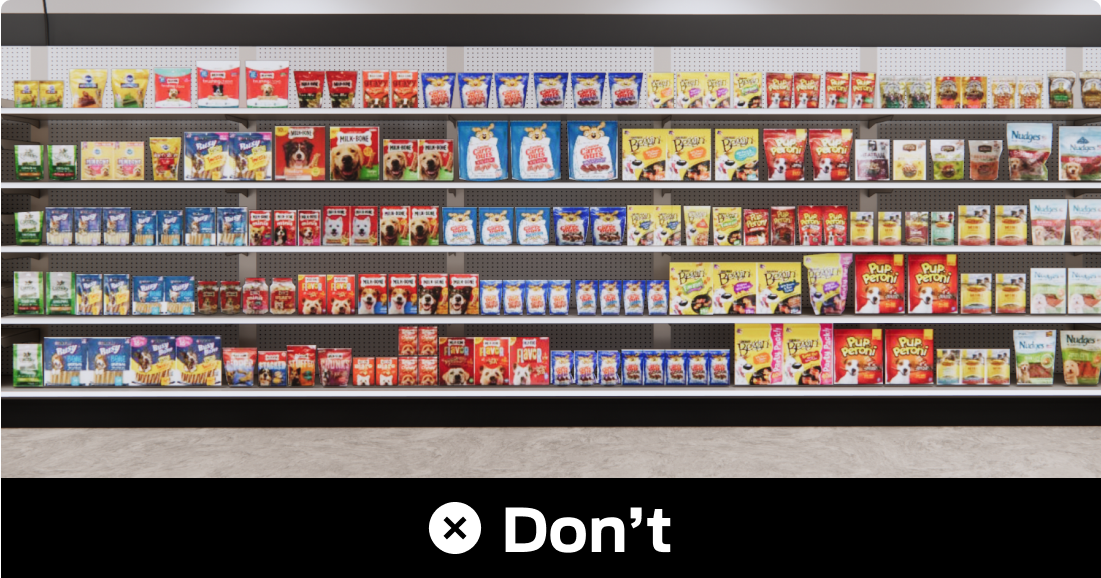
Encourage shoppers to try various treat types—like meaty and crunchy or dental and chew—to increase basket size. Offer variety with exciting new items, and expand crunchy treats with options like biscuits, cookies, and bars.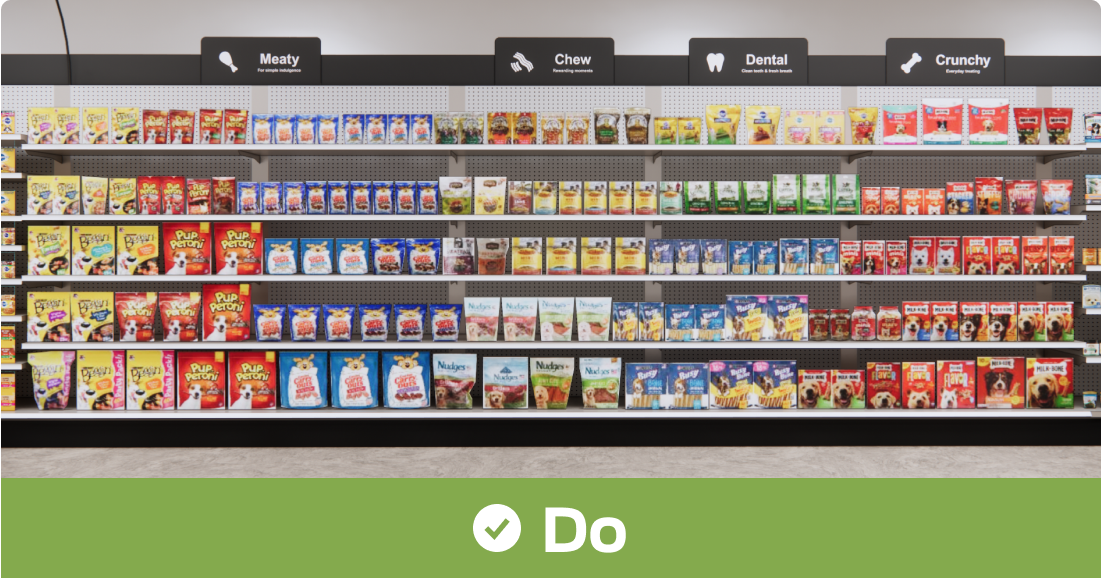
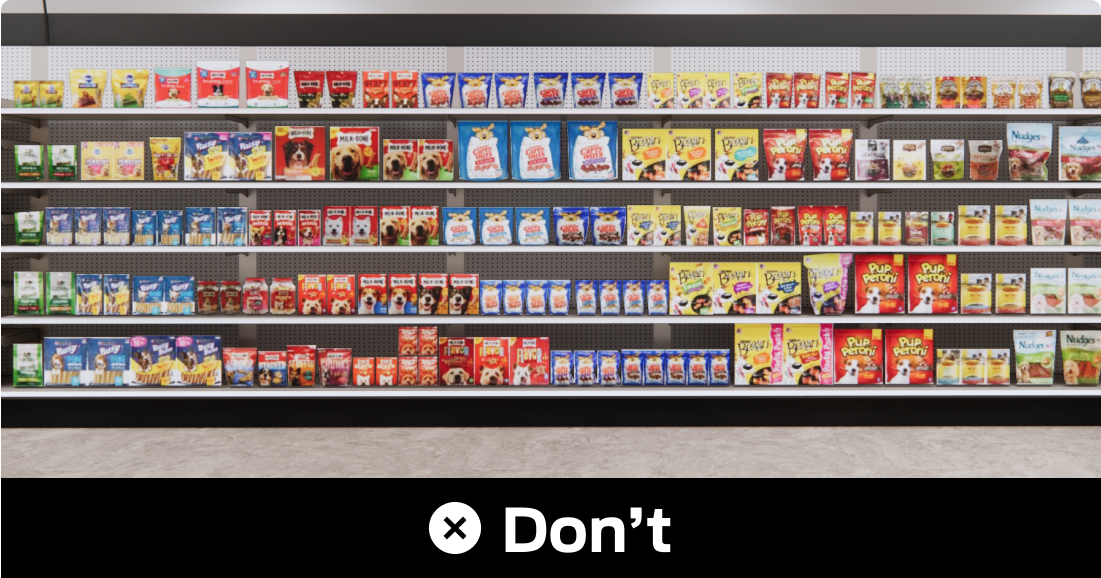
Drive impulse buys by positioning treats as add-ons for those shopping for dry or wet food, boosting category growth.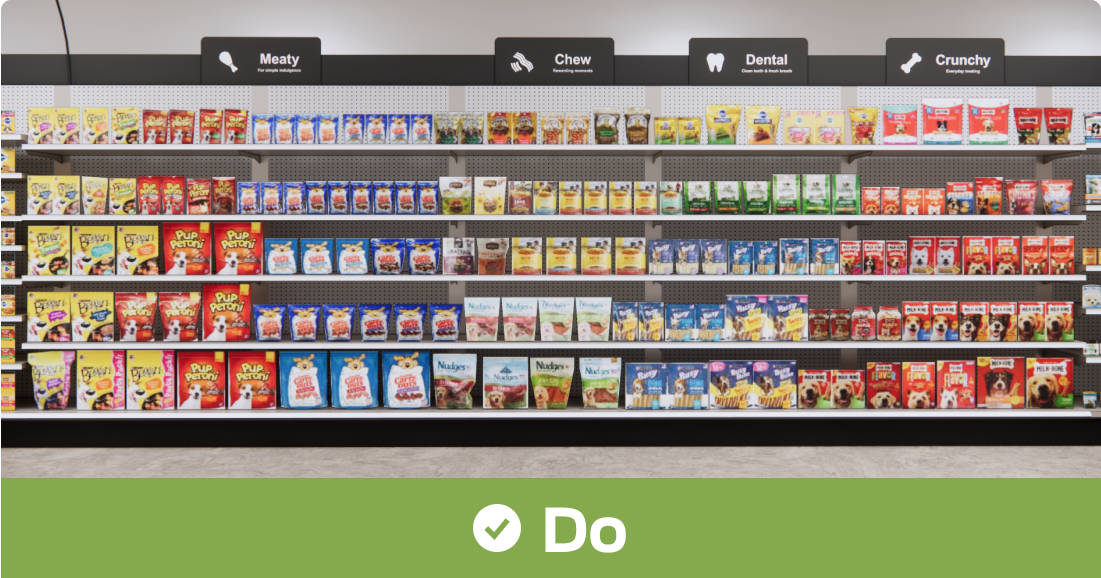
Place smaller sizes prominently to encourage trial purchases, with larger sizes available for repeat buyers and heavy users.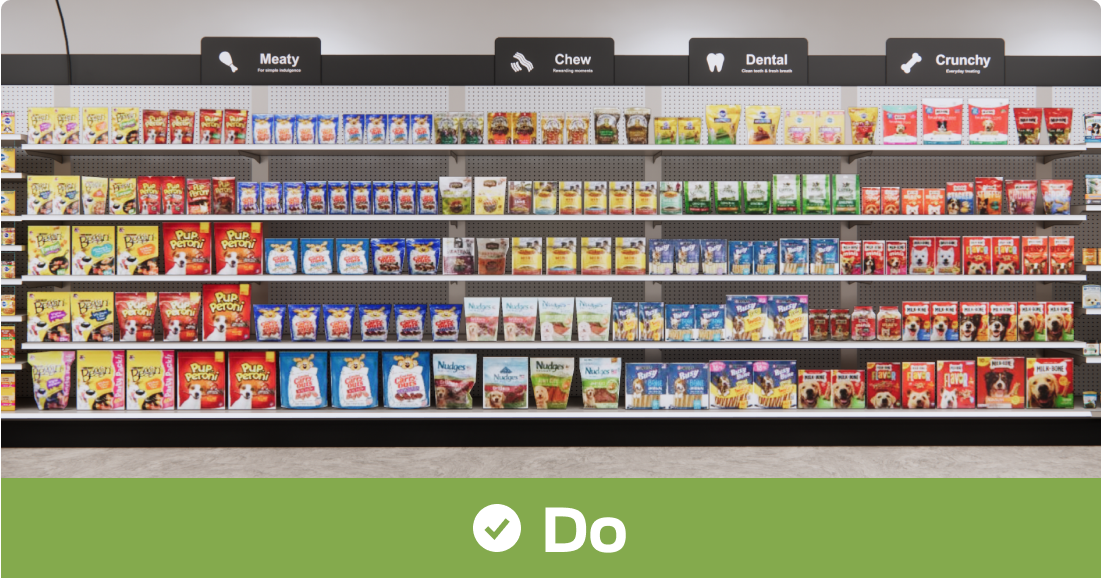
Optimizing Fulfillment Methods for Dog Treats
By addressing these opportunities and challenges, an online best-in-class retail shelving education platform can guide retailers on how to optimize their omni-fulfillment methods, ensuring a seamless and convenient shopping experience for customers.
Dog Treats Fulfillment – 1

Improve the organization and classification of treats to enhance findability, making it easier for shoppers to locate what they need quickly.
Dog Treats Fulfillment – 2

Encourage additional purchases by offering bundled packs, such as pairing Puppy Chow with puppy treats, Beneful with Snackers, Dog Chow with Beggin’, and PONE with Zukes. This strategy can drive sales and increase basket size.
Dog Treats Fulfillment – 3

Promote treats as an excellent add-on purchase to help shoppers reach the free shipping threshold when buying other items like dry dog food. This can incentivize more purchases and enhance customer satisfaction.
Dog Treats Fulfillment – 4
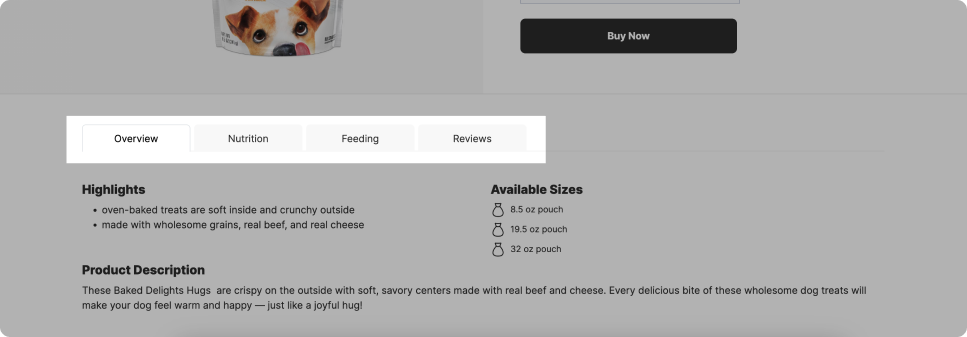
Acknowledge that online shopping can be challenging for shoppers due to the inability to touch, see, and feel the products. Provide detailed descriptions, images, and customer reviews to bridge this gap and build trust.
Dog Treats Fulfillment – 5
Encourage shoppers to add something special for their dog while doing their regular grocery shopping through delivery services. Highlight the convenience and ease of adding treats to their delivery order.
Dog Treats Fulfillment – 2
Encourage additional purchases by offering bundled packs, such as pairing Puppy Chow with puppy treats, Beneful with Snackers, Dog Chow with Beggin’, and PONE with Zukes. This strategy can drive sales and increase basket size.
Dog Treats Fulfillment – 3
Promote treats as an excellent add-on purchase to help shoppers reach the free shipping threshold when buying other items like dry dog food. This can incentivize more purchases and enhance customer satisfaction.
Dog Treats Fulfillment – 4
Acknowledge that online shopping can be challenging for shoppers due to the inability to touch, see, and feel the products. Provide detailed descriptions, images, and customer reviews to bridge this gap and build trust.
Dog Treats Fulfillment – 5
Encourage shoppers to add something special for their dog while doing their regular grocery shopping through delivery services. Highlight the convenience and ease of adding treats to their delivery order.
Dog Treats Fulfillment – 3
Promote treats as an excellent add-on purchase to help shoppers reach the free shipping threshold when buying other items like dry dog food. This can incentivize more purchases and enhance customer satisfaction.
Dog Treats Fulfillment – 4
Acknowledge that online shopping can be challenging for shoppers due to the inability to touch, see, and feel the products. Provide detailed descriptions, images, and customer reviews to bridge this gap and build trust.
Dog Treats Fulfillment – 5
Encourage shoppers to add something special for their dog while doing their regular grocery shopping through delivery services. Highlight the convenience and ease of adding treats to their delivery order.
Dog Treats Fulfillment – 4
Acknowledge that online shopping can be challenging for shoppers due to the inability to touch, see, and feel the products. Provide detailed descriptions, images, and customer reviews to bridge this gap and build trust.
Dog Treats Fulfillment – 5
Encourage shoppers to add something special for their dog while doing their regular grocery shopping through delivery services. Highlight the convenience and ease of adding treats to their delivery order.
Dog Treats Fulfillment – 5
Encourage shoppers to add something special for their dog while doing their regular grocery shopping through delivery services. Highlight the convenience and ease of adding treats to their delivery order.
Utilizing the PLUS Framework for the Dog Treats Segment
By leveraging these areas of the PLUS framework, retailers can effectively enhance their cat litter segment, attracting new customers, broadening product appeal, encouraging premium purchases, and increasing overall consumption.

Welcome:
Target New
Households
Welcome: Encourage Trial of New Products
Encourage trial by promoting new items alongside dry and wet dog food. This strategy helps introduce new products to new pet owners and enhances their shopping experience.
By using the two gateway treat forms, Meaty Analog and Crunchy, to engage 10% of non-treating households, the category could see a $44 million increase.

Broaden:
Expand the Definitions of Traditional Segments
Broaden: Highlight Innovative Treats that Provide Benefits
Ensure visibility of new item forms and functions. Position supplements as a "treat" that is healthy for pets, expanding the traditional treat segment to include functional and beneficial items.
Bringing 5% of non-treat purchasers into the category through a first purchase of functional treats could yield over $5 million in gains.

Upgrade:
Educate Trade Consumers to Higher Price Tiers
Upgrade: Encourage Premiumization by Featuring Elevated Items
Offer a variety of different forms, flavors, and benefits to encourage premiumization within treats.
Getting 5% of Crunchy buyers to spend $1 more per item could add $6 million, while converting 5% of meaty analog buyers to real meat treats could add $23 million.

Expand:
Strategies & Tactics to Increase Consumption of Current Consumers
Expand: Increase Sales with Bundles and Focus on Benefits of Treating
Use bundle promotions to encourage multi-bag purchases and educate shoppers on how treats can help them bond with their dog or aid in training. This approach not only increases sales but also enhances the overall value perception of treats.
If Meaty-only buyers add one more treat type, it could mean:
- Crunchy = $70M
- Chew = $683M
- Dental = $627M