
Cat Litter
Discover how simplifying the cat litter shopping experience can boost satisfaction and sales. Learn how optimized shelving and clear guidance can help shoppers easily find the perfect litter for their needs!

Cat Litter
Understanding Shopper Decision Trees in Retail Shelving
Shopper decision trees (SDTs) provide valuable insights into how shoppers browse products and prioritize their choices. By understanding the hierarchy of what is most important to shoppers, we can enhance the shopping experience.
While SDTs serve as a guiding framework for organizing the retail shelf, they are not meant to be followed rigidly. Instead, they should be used to make the shopping experience more intuitive and convenient for the customer. By referencing SDTs, we can ensure that products are arranged in a way that aligns with shopper priorities, facilitating easier and more satisfying shopping journeys.
Decision 1:
Brand
Decision 2:
Clumping or Non
Decision 3:
Naturalness or Specialty
Decision 4:
Package Type
Decision 5:
Scented vs. Unscented

Challenges Shoppers Face in Navigating the Aisle and Finding Cat Litter
By understanding these challenges, retailers can take steps to simplify the shopping experience, making it easier for customers to find and choose the right products.
Best Practices
for Retail Shelving
Click on a tactic to learn more
Arrange shelves to help shoppers easily identify different brands and forms of litter. Within each brand, organize clumping and non-clumping formulas, with separate sections for conventional, alternative, and system litters.
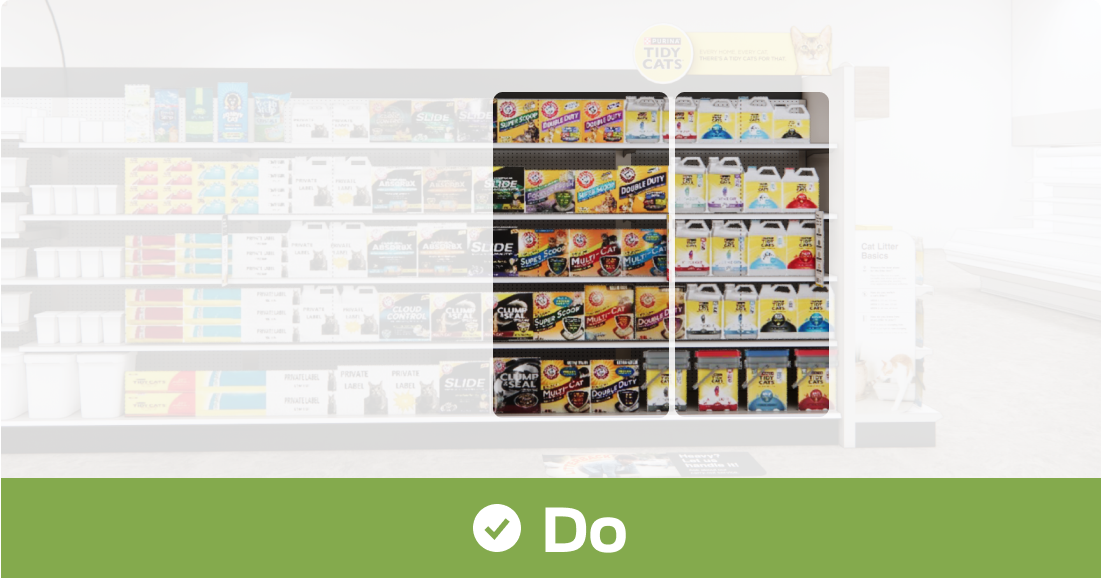
- Vertically brand block clumping litter (EL and LW). Separate conventional, systems, and alternative litter in their own sections.
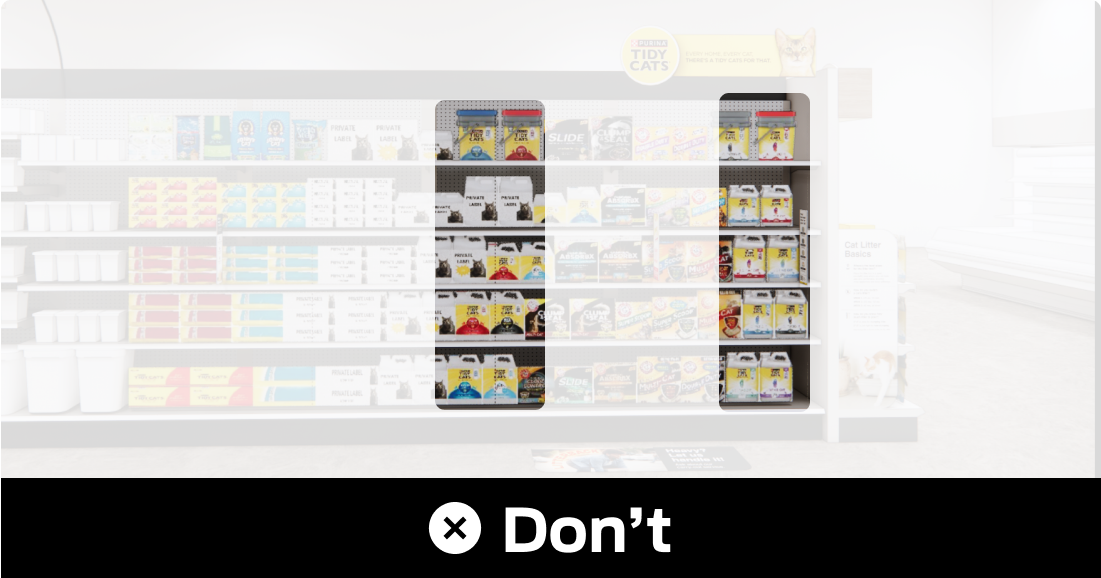
- Do not separate lightweight options from clumping within the same brand.
Place lighter items, such as accessories, smaller packs, and lightweight litter, on the highest shelves, as they are easier to handle. Reserve the bottom shelf for heavier items.
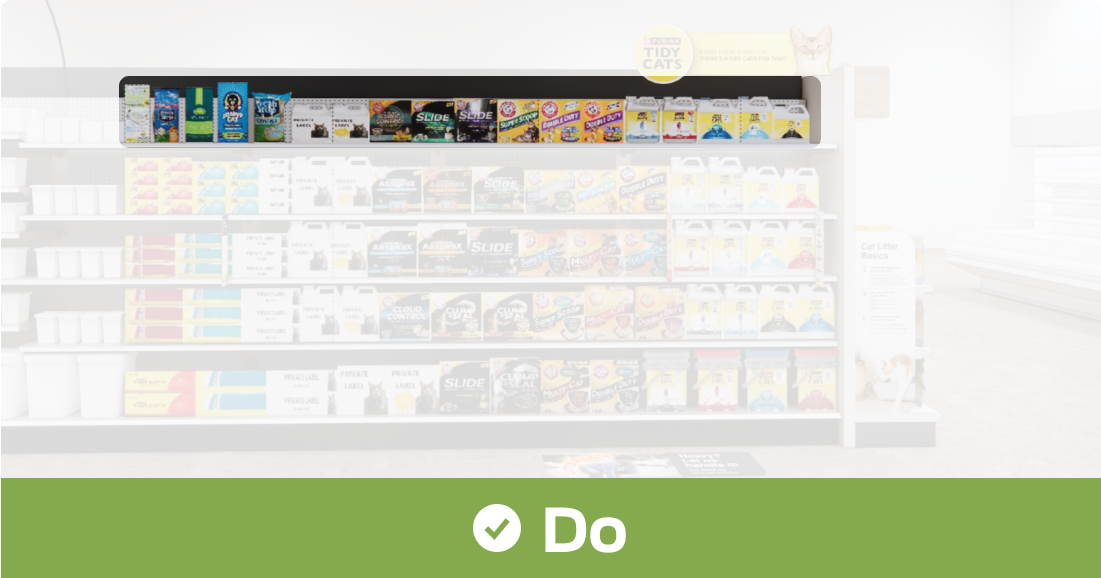
- Place lighter/smaller items and accessories on the top shelf.
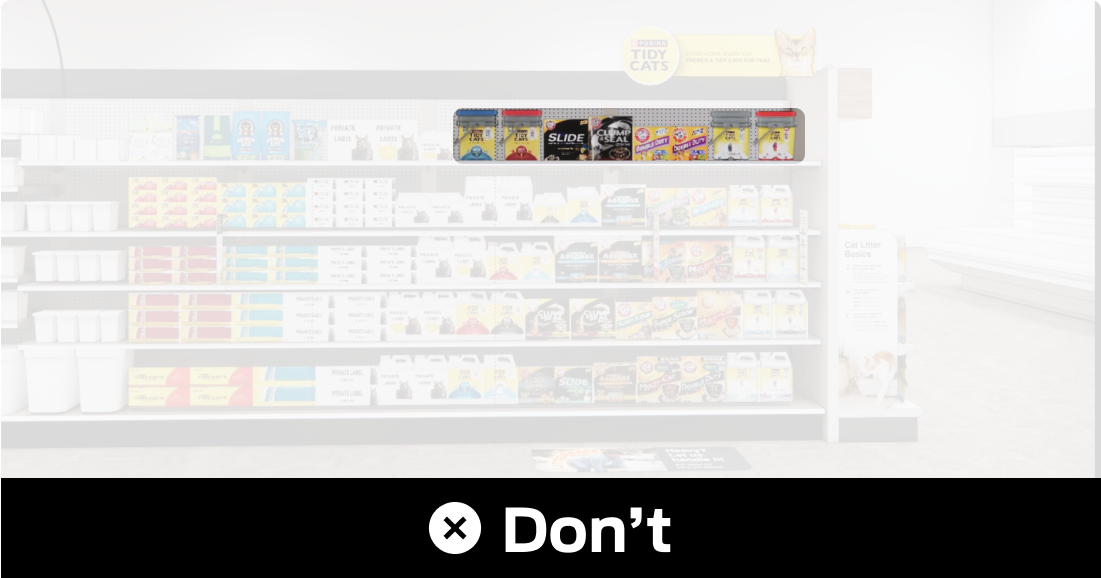
- Avoid putting heavy items on the top shelf.
Guide shoppers toward higher-priced litter options to encourage category growth.
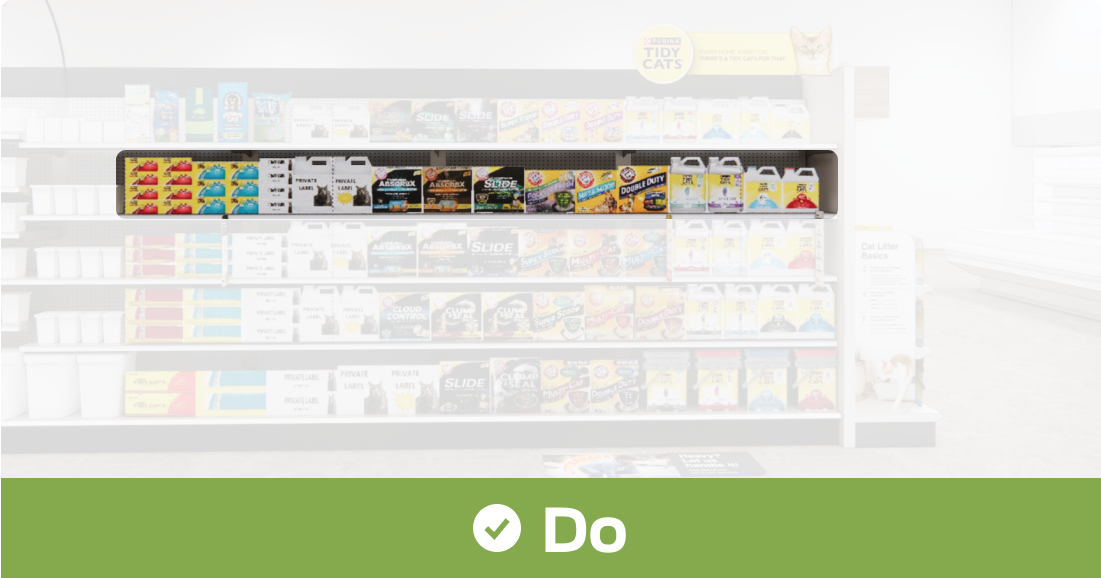
- Use the strike zone for new and higher-priced litter items.
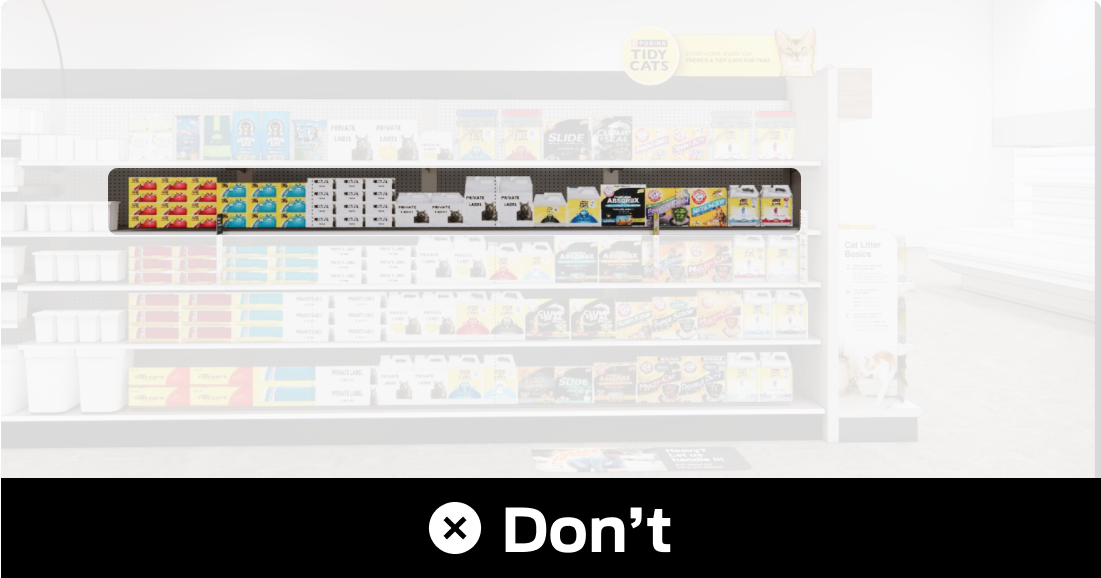
- Refrain from using the strike zone for less popular, lower-priced litter items such as conventional litter or accessories.
Ensure new and innovative products, like diagnostic litters, are highly visible. Focus on educating pet owners about these advancements.
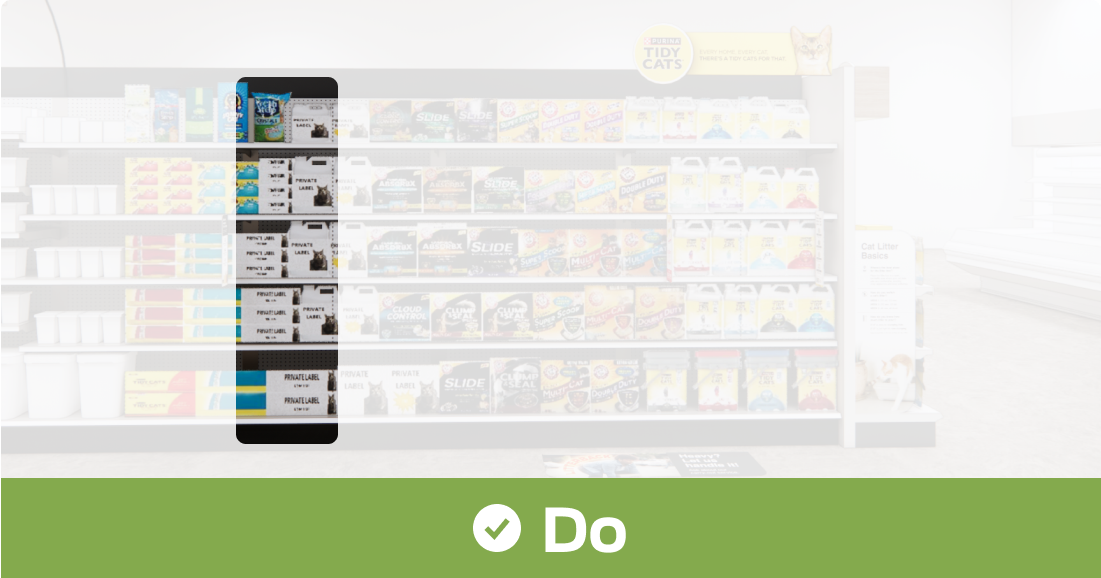
- Highlight innovations that grow the category, such as diagnostic, lightweight, and specialty litter (Tidy Feet/iRobot litter).
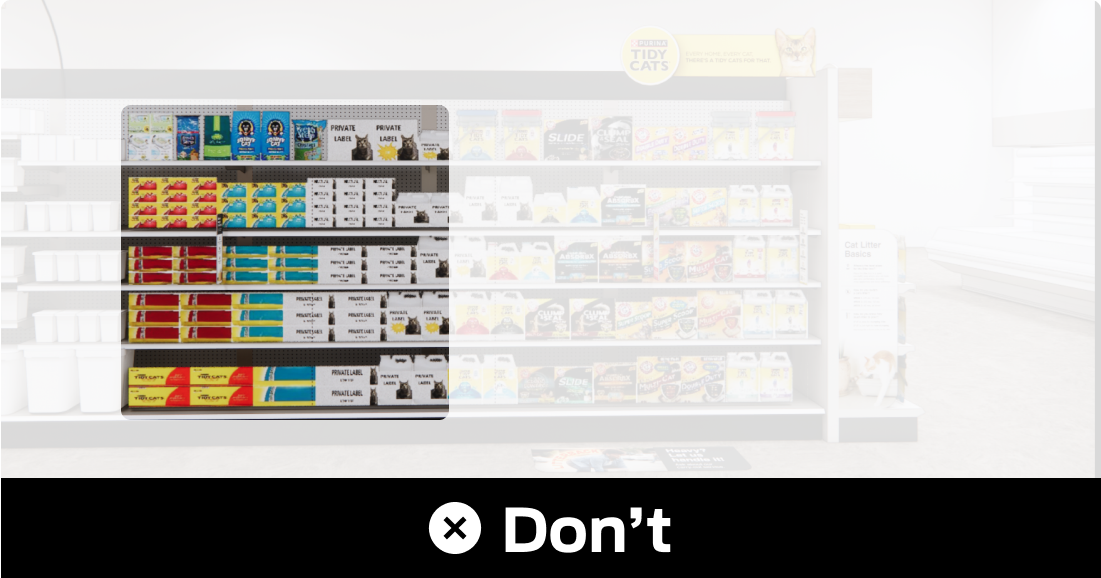
- Do not overspace less popular or value items such as conventional and alternative litter.
Provide clear, educational information about the different types of litter and the specific problems they solve to help shoppers make informed decisions.
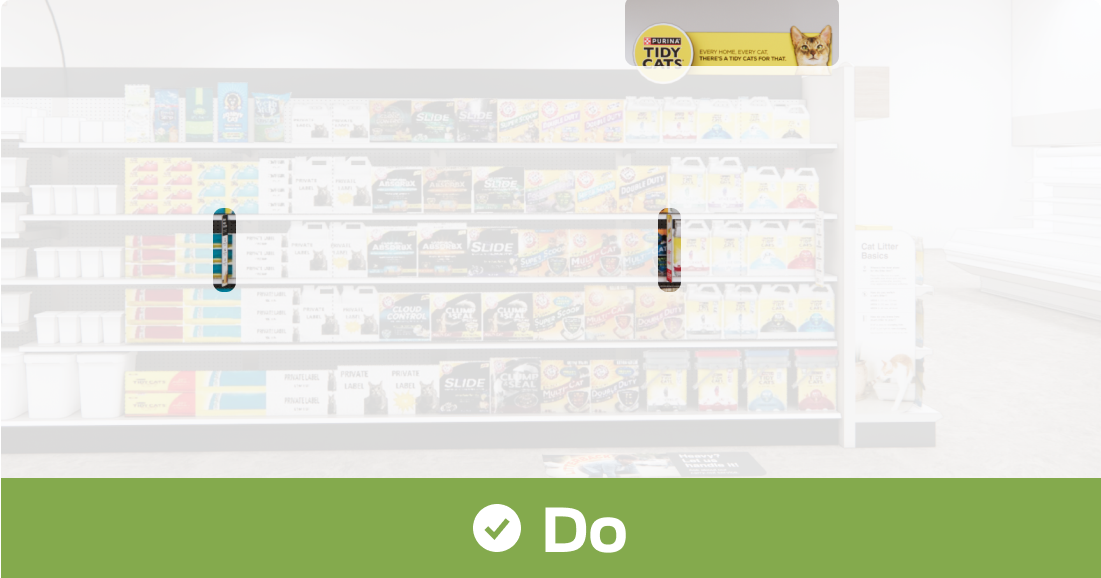
- Utilize signage that directs shoppers to brands and forms of litter while providing education.
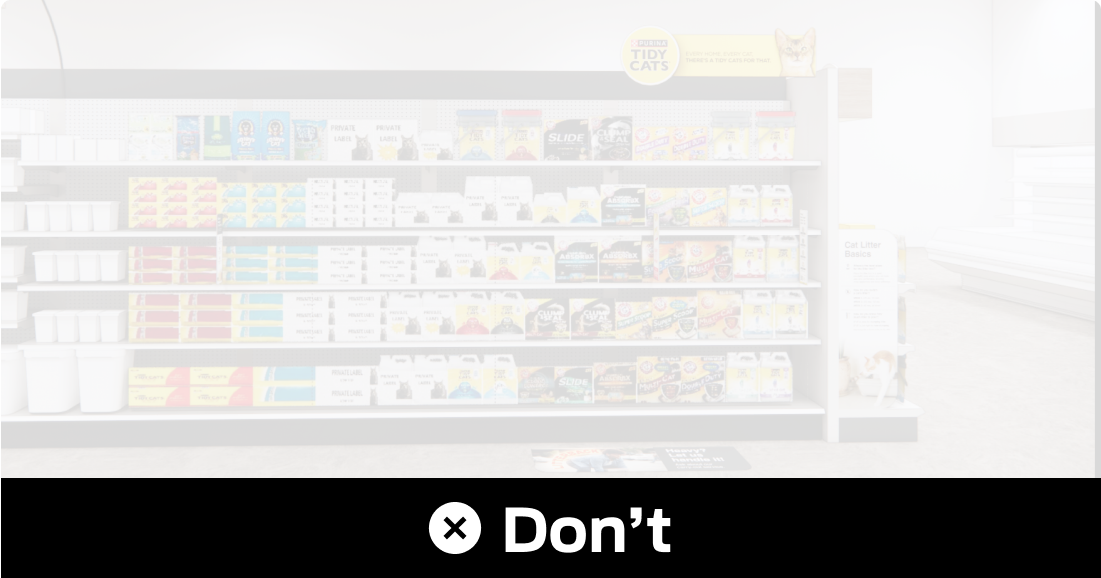
- Overwhelm the shopper with too much signage or conflicting information. Do not add signs everywhere with digital screens and floor clings.
Optimizing Fulfillment Methods for Cat Litter
Cat Litter Fulfillment – 1

Most litter shoppers buy in-store as part of their routine. Curbside pickup offers same-day convenience, avoids shipping fees, and saves shoppers from lifting heavy litter into their cars.
Cat Litter Fulfillment – 2
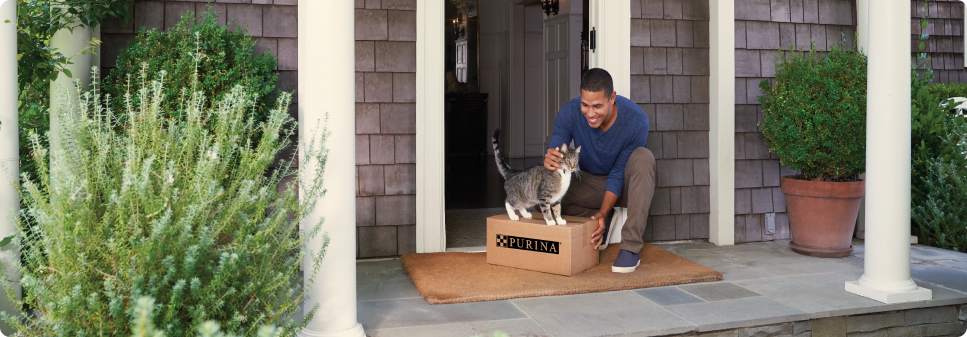
With many litter options, online shopping makes it easier for shoppers to research and compare. Retailers can cross-promote litter and cat food to grow baskets and attract new category shoppers.
Cat Litter Fulfillment – 3

With 70% of shoppers scooping litter daily or a few times a week, subscriptions offer a convenient way to stay stocked. Many retailers incentivize autoship with recurring discounts.
Cat Litter Fulfillment – 4
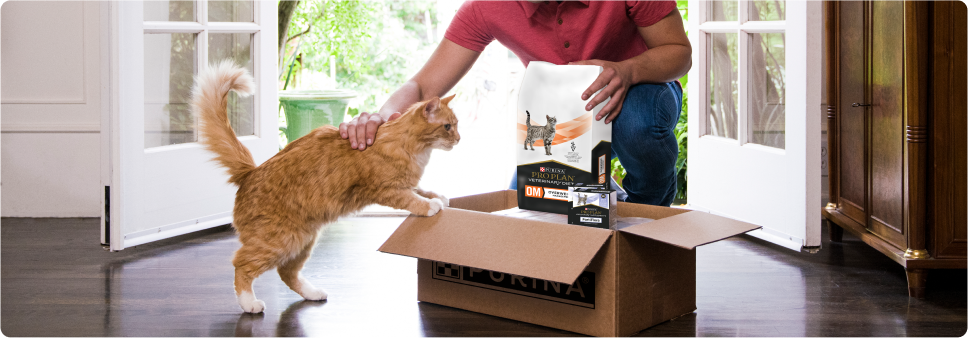
Over half of shoppers replace litter the same day they run out. Home delivery offers a fast, convenient solution—plus the opportunity to add other items and meet delivery minimums.
Cat Litter Fulfillment – 2
With many litter options, online shopping makes it easier for shoppers to research and compare. Retailers can cross-promote litter and cat food to grow baskets and attract new category shoppers.
Cat Litter Fulfillment – 3
With 70% of shoppers scooping litter daily or a few times a week, subscriptions offer a convenient way to stay stocked. Many retailers incentivize autoship with recurring discounts.
Cat Litter Fulfillment – 4
Over half of shoppers replace litter the same day they run out. Home delivery offers a fast, convenient solution—plus the opportunity to add other items and meet delivery minimums.
Cat Litter Fulfillment – 3
With 70% of shoppers scooping litter daily or a few times a week, subscriptions offer a convenient way to stay stocked. Many retailers incentivize autoship with recurring discounts.
Cat Litter Fulfillment – 4
Over half of shoppers replace litter the same day they run out. Home delivery offers a fast, convenient solution—plus the opportunity to add other items and meet delivery minimums.
Cat Litter Fulfillment – 4
Over half of shoppers replace litter the same day they run out. Home delivery offers a fast, convenient solution—plus the opportunity to add other items and meet delivery minimums.
Utilizing the PLUS Framework for the Cat Litter Segment
By leveraging these areas of the PLUS framework, retailers can effectively enhance their cat litter segment, attracting new customers, broadening product appeal, encouraging premium purchases, and increasing overall consumption.

Welcome:
Target New
Households
Welcome: Encourage new cat owners and kitten owners to use litter
Focus on attracting and educating new cat owners, including those with kittens, about the importance of using litter. Provide guidance and tips to ensure a smooth transition to using cat litter products.
Capturing just 10% of the 30% of cat owners who currently do not buy litter could result in a $139 million opportunity.

Broaden:
Expand the Definitions of Traditional Segments
Broaden: Expand the Definition of Traditional Segments by Showcasing Innovation and Technology
Highlight innovative products that enhance the traditional litter segment. This broadens the scope and appeal of litter products to a wider audience.
If 5% of litter-buying HHLDs invest in Petivity, and it extends a cat's life by 1 year, the category could gain $200m. Extending a cat's life by 2 years equals a $400m opportunity.

Upgrade:
Educate Trade Consumers to Higher Price Tiers
Upgrade: Educate shoppers on the Advantages of Upgraded Litters
Share the benefits of upgraded litter, such as lightweight and diagnostic litters. Encourage trade-up to higher-priced litters that provide a better experience.
If 1/3 of value buyers upgrade to premium, it is a $119 opportunity. If premium buyers switched 1 purchase/year to super premium, it is a $22m opportunity.

Expand:
Strategies & Tactics to Increase Consumption of Current Consumers
Expand: Educate shoppers on 3" litter box fill and how often to change the box
Provide tips on litter box maintenance, including the recommended 3" fill level and frequency of litter changes. Education can lead to increased consumption and better customer satisfaction.
If half of current EL/Clump litter buyers purchased 1 more unit per year, it is a $177m category opportunity.